Reviewed by Jake Maricich
Photos by Amanda Romankiw
Writing for a concert like this one feels daunting. That’s the best way I can describe attempting to engage with Cameron Winter’s solo performance at the Palace Theatre: daunting. How do I capture the presence of a man, no more than a silhouette against the backdrop of a grand piano, rumbling in baritone about how God may actually be real while the audience shakes around him? And yet simultaneously, how do I capture the presence of that same man as he speaks through my screen about how he spent the pandemic on Virtual Reality Chat or dodging questions on his band’s Twitch chat as to why his lyrics all too often involve feet.
No artist in recent memory has had quite the press run as Winter has this past year. The end of 2024 was met with the release and critical acclaim of his debut solo album, Heavy Metal, which would then be followed by yet another breakout record, Getting Killed, with his band Geese. Some TV and radio performances later— and a pop-up show in Brooklyn that has been compared to the Beetle’s 1969 rooftop performance— Winter and Geese cemented themselves in a spot of both immense critical acclaim and widespread popularity, a somewhat unheard of feat for a band and their frontman to separately and simultaneously achieve at this level of success. Every time the air around Winter can’t seem to grow any hotter, he somehow manages to propel himself further into the limelight. His mini-residency at the Palace Theatre immediately followed his sold out show at Carnegie Hall in New York, which drew comparisons to the songwriting giants of Bob Dylan and Tim Buckley who headlined that venue at a similar age.
Winter’s Carnegie Hall performance focused all lens on his undeniable talent – quite literally speaking, as this show drew the panavision cameras and filmmaking vision of Paul Thomas Anderson on stage.
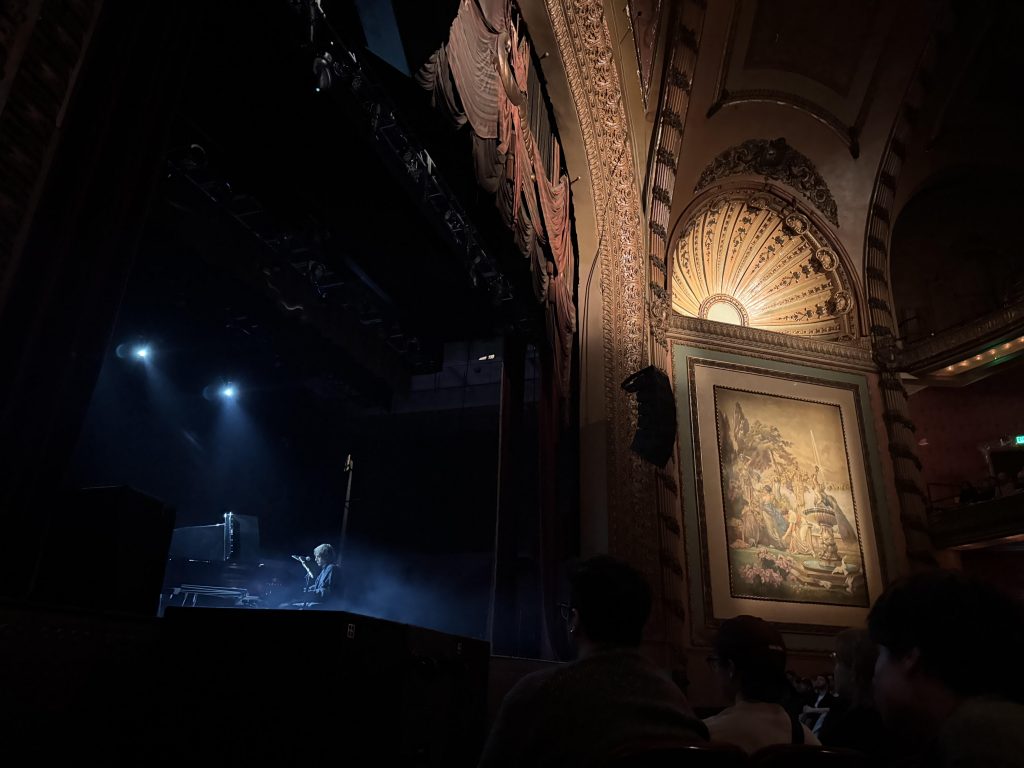
Despite more eyes than ever being honed in on Winter, the moment he stepped onto the Palace Theatre’s stage, he removed himself from this pedestal of idolization and connected with the audience on an intimate level.
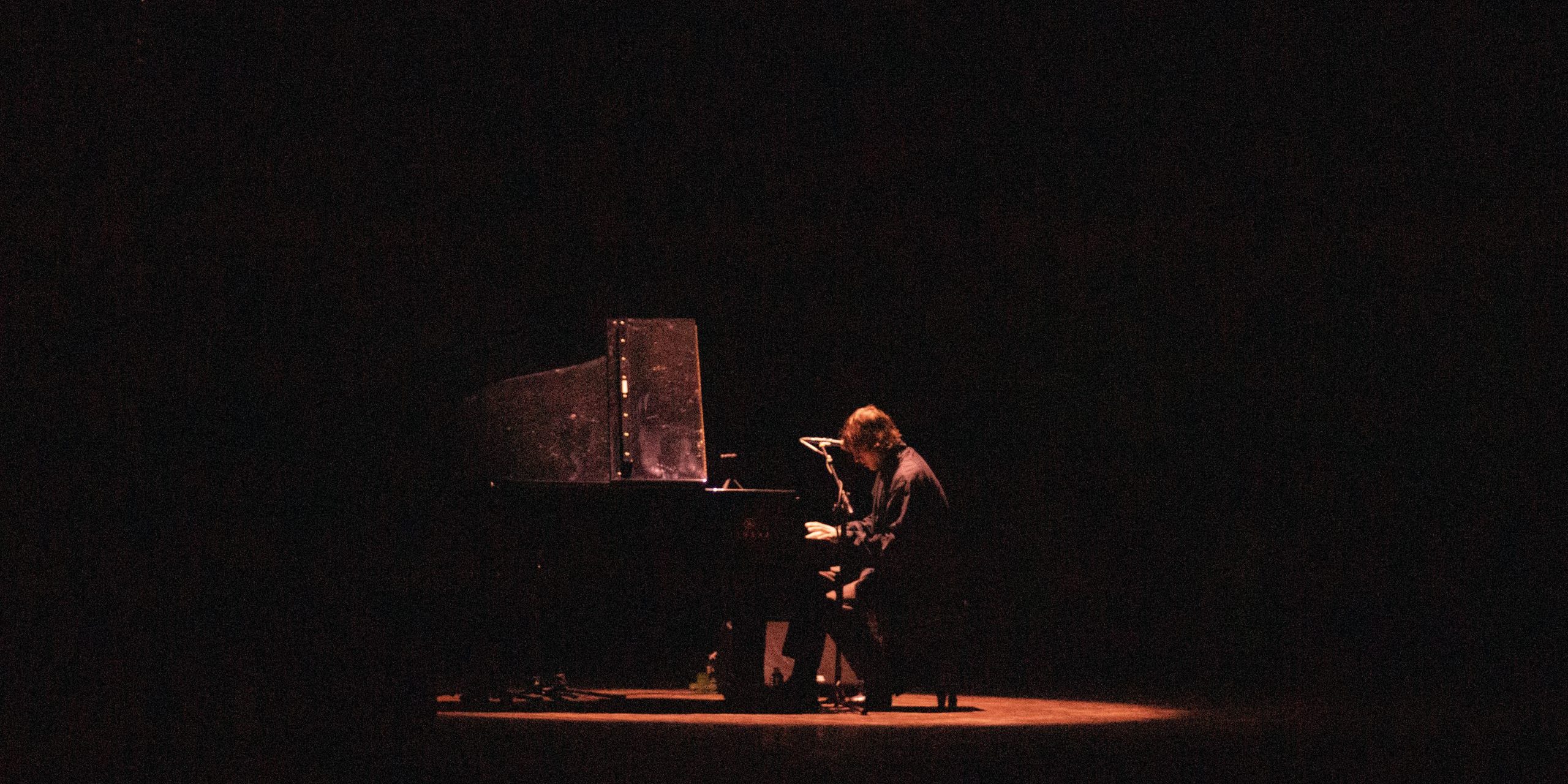
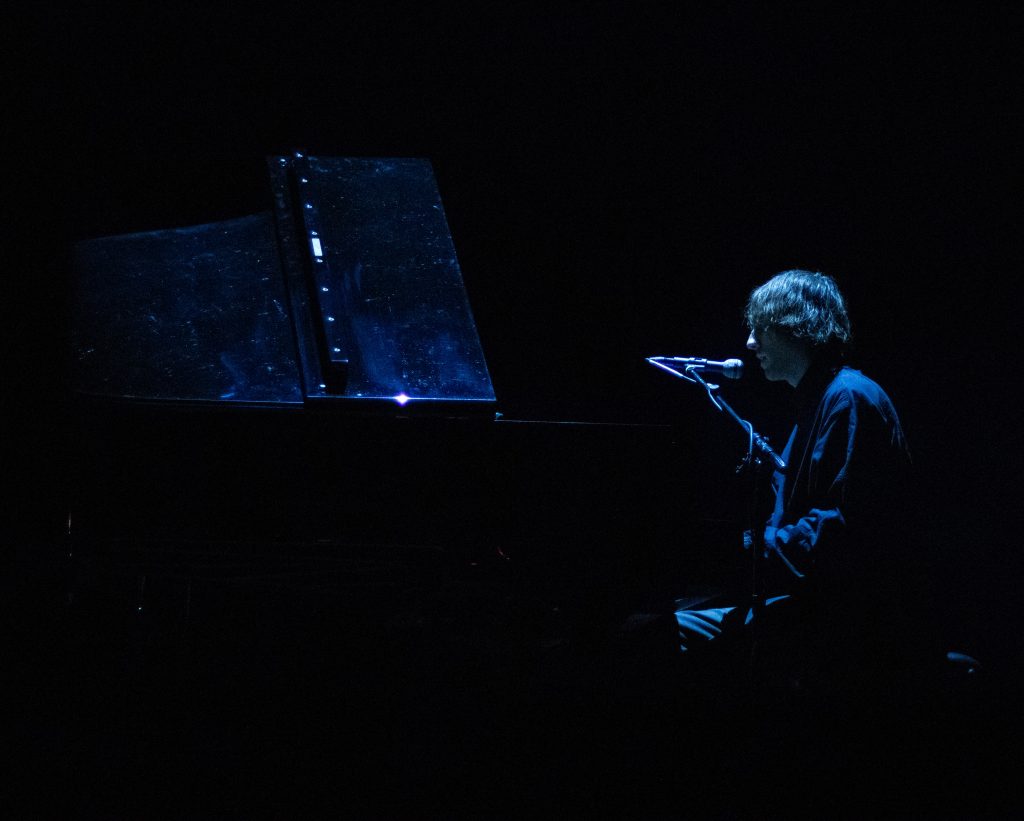
Winter performed the entire set with his back facing the house, forcing the audience to focus on the instrumentals and lyrics rather than the man who has been capturing the rest of the music world’s attention for months.
The stage set up was one of the things that sat with me the most since leaving the concert. I had never really recognized Winter as a pianist up until this point. In my mind, he was a vocalist first, a guitarist second, and a pianist only when needed. I’m not sure where this baseless conclusion was drawn from— maybe his guitar work in Geese permeated the front of my mind, but this assumption couldn’t be farther from the truth. Throughout the show, I felt transfixed by Winter’s relationship with the piano more than anything else. His passion for this instrument radiated in his acoustic arrangements, which expressively filled the theater with an addictive energy. As Winter sang a stripped-down version of “Love Takes Miles,” I found myself thinking the song was written out of love for that piano rather than for any individual.
A few songs later came my favorite performance of the night, his rendition of “Drinking Age.” I struggle to really describe his performance of the song because I was honestly so moved by it in that dark concert hall. All the pieces— the piano, the lyrics, the melody—- came together in a way that felt so complete and moved me where it feels nearly impossible to analyze each component individually. Here, the piano felt like a living organism, breathing out every chord Winter played.
Beyond the piano, it would be a disservice to discuss Winter’s music without revering his lyricism. His writing is filled with hyper-specific imagery and phrasing that immediately touches listeners even if not entirely understood. Winter played a number of unreleased songs that night, but the one that stuck out the most was titled “Emperor XIII in Shades.” The song contains a line that goes “It was a bad day for Jesus and a quiet night in California.” The mood and image of that line best captures what so instinctively draws me to Winter’s lyrics.
When I think about Winter’s music, both in his solo work and in Geese, the word “unsteadiness” comes to mind. His vocals wander and warble to lyrics with continuous and resounding declarations of “I don’t know”s over chord progressions that carry a sense of yearning with no distinct resolve. This unsteadiness, and the willingness to reside in that unsteadiness, is what makes Winter’s sound so refreshing and appealing to listeners. However, his performance at the Palace felt remarkably stable compared to his recorded tracks— a distinction that made this show even more unique and interesting to watch.
During more intense and lyrically heavy songs like “Nina + Field of Crops,” “Drinking Age,” and “$0,” a tranquil energy lingered throughout the theater that is not present in their recorded iterations.
These moments reminded me of an interview where Winter talked about the time he spent on Virtual Reality Chat during the pandemic, a game where players go into virtual chat rooms as virtual avatars. For a game known for being culturally adjacent to AI slop and brain rot (though it predates both of those), he spoke of the experience with great reverence. He discussed how he encountered a couple who met up everyday as their virtual avatars as an attempt to be with each other when they couldn’t in person. That moment stuck with him, and it’s stuck with me too. He took this as a sign that even as the times change, the thing we want and need as humans remains the same. All we want is to be seen and be known— and to see and know each other. This message exists at the core of Winter’s art. The steadiness I felt during his performance came from the collective environment of the theater, a space to be seen and be known.
Before the show, I remember seeing online comments where people argued that the Winter’s back was turned away from the audience to make them focus on the art rather than the artist. However, I believe Winter’s intention was to face the same direction as us – towards the piano. With this, it felt like he was watching the art just as much as we were.