
All media provided by Alex Lucke
Alex Lucke, @alexlucke (pronounced Lucky), is a freelance web designer and developer, as well as the founder and creative director of AM LUCKE, a boutique digital studio that brings clients’ and brands’ personalities to life. Specializing in creating Squarespace sites that look like they’re not Squarespace sites, Lucke is self-taught and very talented in her respective medium. To listen to the interview in full, check out @andmore.archive on Instagram.
—
This interview has been edited for clarity and brevity.
Ava: Alex, thank you so much for joining me today!
Alex: Yay, thanks for being here, Ava. I’m so excited.
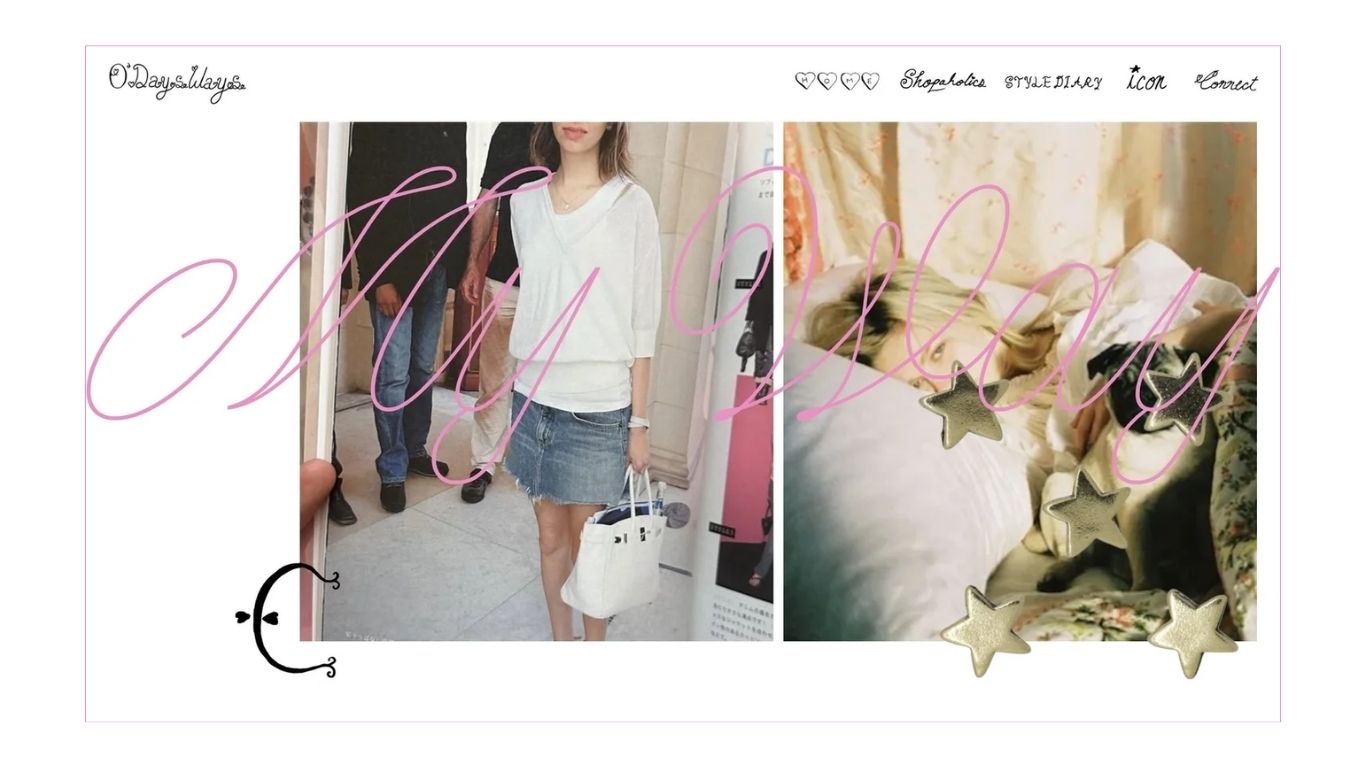
Ava: Me too. I have to say, I’ll say how I initially found your work. So, I first found your work through Cierra O’Day’s blog, O’Day’s Ways.
Alex: Oh yeah!
Ava: And I was absolutely obsessed with it because there’s so much personality in it, and I’ve always wanted to see if I would make my own blog. Hers was just so clearly her. I was interested in seeing who made it, and then I found your work. And since then, I’ve kept up with different things you’ve been doing!
I was wondering, how do you capture someone’s personality in that digital form? How do you start? Or what are your first steps?
Alex: I love this question. First of all, thank you so much; that means so much to me. I was just talking to someone yesterday, and I really feel like I really am just a girl. So, it’s so cool to see these things kind of come to fruition. I would say when it comes to encapsulating everyone’s personality, I’m an incredibly collaborative person.
Alex: So when Cierra approached me, I knew that I had to kind of do it right. And she’s really the first person that I feel like I was very much pinching myself about, because I was like, “How does this girl know about me?” So when I wanted to really bring her look and vibe — which is so clear, and she has such a strong sense of personal style — we really just sat down and started talking about what she wanted to present. A lot of my work is about creating these digital worlds. And I think that’s what sets me apart from other designers. And Cierra and I really got into it with — we create mood boards. So I always create a mood board for my client and have my client create a mood board, and then we get to compare and contrast.
That result is really just a product of working very closely with my clients and trusting them just like they trust me.
Ava: As far as when you actually put the website out there, how does it work with clients? Like Cierra, for example — I know she’s uploading different articles, photos, or links to different clothing. Do you use something where you teach her to do that so you don’t have to continuously be the editor?
Alex: Yes. A key pillar of my practice is sustainability because I love to help my clients. I love to put my IT hat on. But also, at a certain point, I understand if it’s your product, you’re going to have way more urgency. If she wants to get a blog post up, it’s way nicer if she can just put hands to the keys and make it happen for herself. So I worked really closely with her, just like I do with all my other clients, and I’m like, “Okay, here’s how you update this.” Part of the reason I work on Squarespace is that it’s so DIY-focused that I feel really confident giving my clients a quick tutorial. I’ll send them video tutorials sometimes, then I’m like, “You’ve got it. You can hit me up, but you should feel empowered to do this on your own!”
Ava: I feel like a lot of what I’m interested in is fashion journalism. I’ve noticed that, as most media is kind of transitioning to online — or is all online at this point — that different fashion companies have to focus more on their online presence. I’m wondering your thoughts on the direction of that transition to digital spaces? Do you think that brands are portraying themselves well right now?
Alex: I think yes and no. Obviously, I’m biased, but I love that people are coming to the internet to express themselves, because it does really well for me. And I think the internet should be a really fun space.
I do feel like brands that are doing it well feel like you’re walking into the store and getting that vibe, which is really important to me. I really value an in-person experience and think even chatting with people, it’s so nice to feel like you know them. So when brands do it right, and they go online, and they’re creating this kind of experience instead of just a website for a website — which I think a lot of design has gone sterile — it feels really good and really rewarding.
Ava: It’s really cool to actually enjoy looking at a website, because sometimes it’s not intuitive, or it’s just not nice to look at. I feel like a lot of people need to try a bit harder to make it more of an experience.
Alex: I agree. I was born in the mid-90s, and I feel like I got to really grow up with the internet being a place. You’d log on, and you would experience whatever it was. I used to play a lot of the dress-up games — I was a Tumblr girl — And it was so nice to do that and then put my phone down and go live my life.
The irony of creating these good experiences is I feel like you can leave them and go do other things, having that experience in your pocket.
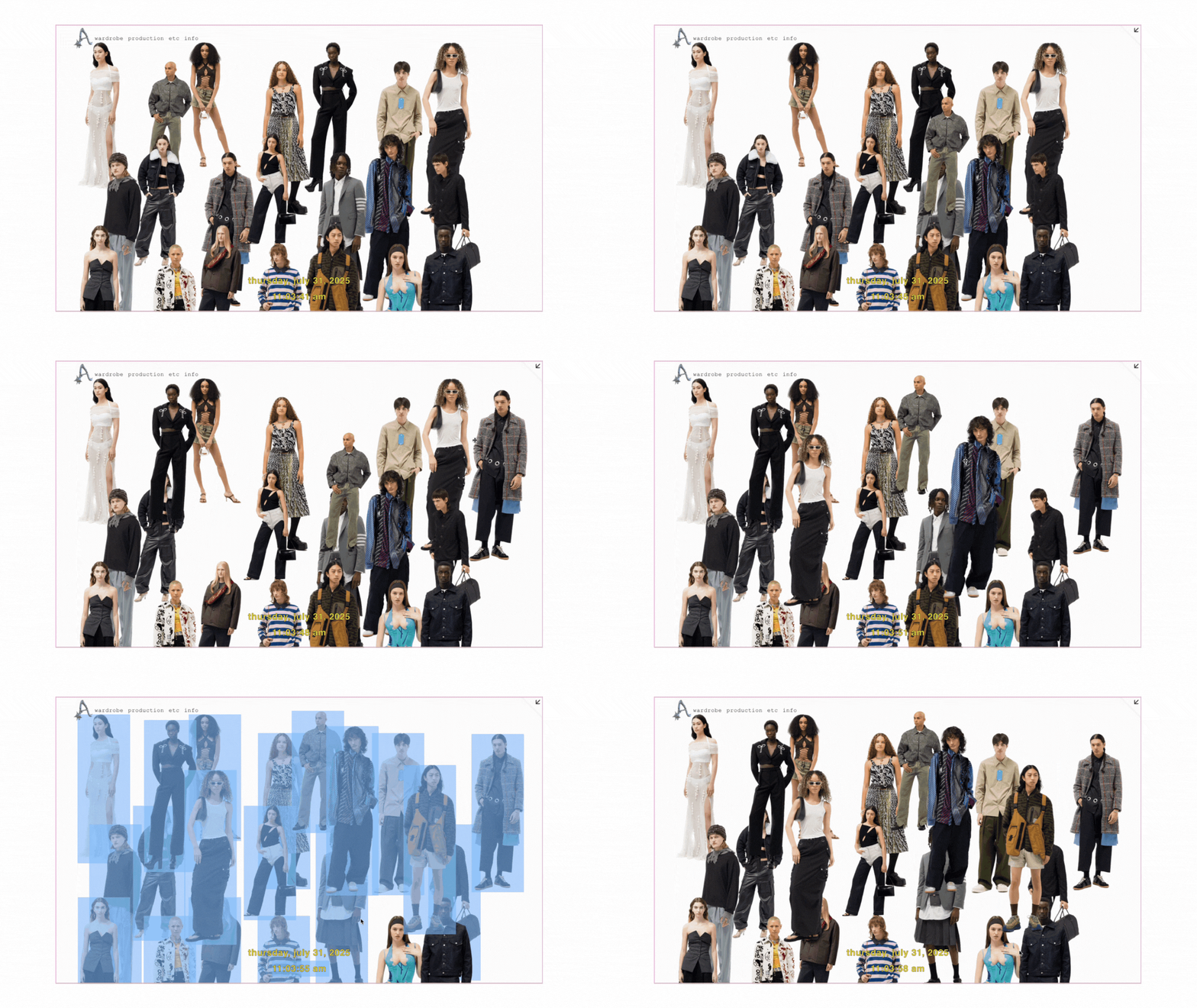
Ava: Absolutely. I was going to say that some of your websites remind me of the early 2000s. When you get to the home screen, I love the idea of picking what you want to do next, something that’s kind of like a choose-your-own-way.
That’s a lot more fun because people will be more inclined to actually spend time and feel like they’re relating to the brand. There are a lot of benefits to that style, and I think it’s coming back.
Alex: I agree. I think that it’s really important, again, for these smaller creators to stay very true to themselves, because it is so memorable. There’s something so nice about giving agency back to the user, to your point, where it’s like, “No, like just come hang out; this is your time; you should experience it how you want.”
Ava: I saw on your portfolio website that you mentioned the place where you kind of find inspiration is, ironically enough, logging off.
Where do you continue to find that source of inspiration? Or please talk more about being offline to find things like that?
Alex: I do really get a lot of my inspiration from my community in the real world. I’m so lucky, I moved to Chicago, where I’m based, six years ago, and the community that I have here is so incredible and amazing. I really look to a lot of my friends — all of them are creative, they’re all DJs, or stylists, or writers, or designers, and I feel like I really look to them, which is great.
Ava: I know you studied journalism in college. Tell me about the journey of going to college and what you wanted to do.
Alex: I actually thought I was going to be an engineer. I ended up going to the University of Nebraska because I met with one of the journalism professors at the time, his name is Scott Winter. He’s no longer with the university, but he was amazing. And he was like, “You’re not an engineer; you’re a journalist.”
And I was 18, like, “Okay, great. You’re right. You know better than I do.” So I enrolled in school there and ended up graduating with a degree in journalism and advertising. But about halfway through my time in journalism school, I was like, “I don’t think this is for me.” I was like, “I really admire the people that it’s for, but it just isn’t feeling like a very good fit.”
But I did have a professor in the journalism school take me under his wing; his name is Matt Waite, and he’s incredible. He got me into informatics, which is like translating data into stories. I was like, “Wow, this is really great. I get to combine this coding knowledge, math, and science with storytelling,” which I was really excited about. And for my capstone, I built a website and kept websites in my pocket after I graduated.
I dabbled in restaurant jobs, retail — very client-facing, which, honestly, best advice I could ever give, because I think it’s the reason I’m able to make the connections I am, is practicing conversation constantly.
I ended up moving to Chicago and heard through the grapevine that there were these women who were charging really great prices for Squarespace websites. That was my first “aha” moment, where I’m like, “Oh, people are really doing this professionally.” I introduced myself to them at one of their coffee talks and was like, “I really want to work for you.”
I worked with this company for four and a half years. My time there was awesome, but it was very fast-paced. I’m grateful for it because I learned so much in a small amount of time, but I needed to step back because I was like, “I feel like I’ve just done so much. I’m really burnt out”. Then went to an agency job, entertained project management, which was fine, but I could really hear this voice in the back of my head that’s like, “You need to get back on this,” because I maintained some freelance work.
Then I actually started my own agency in July, when I quit that other agency job. So I’ve only been fully on my own for a few months, which is kind of surreal, but that’s how I got to where I am today.
Ava: Wow. So you have a plethora of experiences.
Alex: Yes. I feel like I had hands in so many different pockets in the best way.
Ava: I think that’s good. So you can actually be certain of what you’re doing, because I feel like a lot of pressure graduating — it feels like you have to know what you want when you’re 18
It’s very intimidating to transition to self-employment. Did you really start learning the coding aspect and how to create websites on your own during COVID?
Alex: Yes, it was very much 2020. I was at home. It’s so funny because my first desk, when I got started, literally was a tipped-over Tupperware container. So very humble beginnings, working on my college laptop. For a while, I was actually working on a MacBook Air and was like, “This is not going to work. This poor computer is pulling out all the stops.”
I did a lot of YouTube tutorials. Will Myers is an amazing resource. I took an I Love Creatives course really early on, which was super helpful. But I’d say a majority of it was really using DevTools in Chrome and just looking at websites that people are building and then trying to figure out what the difference in the code was.
I feel like I had a little bit of a head start because I was already kind of loosely familiar with coding from that professor that I mentioned, but I definitely was not building true websites with code until COVID. I was like, “Well, I have nothing better to do. I might as well really lean into this.”
Ava: Do you have any opinions on AI’s role in all of this?
Alex: I do. I feel like, ultimately, the best design is human design. I think there’s something so warm and human when you’re concepting it yourself and in conversation with people that I feel like AI, at this current moment, can’t really replicate. There is just something so — I hesitate to use “messy” because I don’t think that’s quite right — but something a little undone that I feel like AI creates these, everything’s like hyper-realistic, almost.
Ava: As far as kind of becoming self-employed, are there any surprising challenges?
Alex: I’m not going to sit here and be like, “It’s so easy”. The highs are so high, and the lows are so low. Not having consistent income can be really tricky.
I remember when I first quit my agency job, I had a few clients who were really eager. Then I stepped away and was like, “Hey, like, my time is yours.” They were kind of like, “Oh, wait, actually, something shifted.”
I remember being really nervous and really regretting my decision and being like, “Did I do the right thing? I had stability, I had all these benefits.” But I do love having a space where I can kind of create my own schedule, trust my own work.
I found it difficult before abiding by other creative constraints. To have my own capabilities to make those decisions and be like — even to your point with AI — like, “My design is good and I know it’s good.” Trusting that has been, I would say, the most rewarding part and really helped me validate myself that I’m actually doing this.
Ava: But congratulations! That’s really awesome. I feel there’s so much more to come now that this is your sole focus.
I also wanted to add that I really like how you incorporate physical media into the websites you make!
Alex: You get to pull from your own references. I think there’s something nice about honing in on your own taste. This really resembles — to bring it back to the early things talked about— this little game that I used to see. That’s what makes it so fun, and I think why my work resonates, because I’m really trying to dip back into those very human, early internet experiences.
Ava: A lot of people in your circle seem to be in creative spaces, but especially in fashion spaces. Did you always have a desire to work in fashion? How do you feel like what you do intersects with fashion overall?
Alex: I feel like I’ve always loved fashion and style. But growing up in the Midwest, I felt like my closest connection to that was definitely like Seventeen magazine or like Teen Vogue RIP.
After I left school, I was like, “Wow, I really do care about this.” I think design, fashion, and lifestyle really tend to overlap, and it’s really helped me find a lot of like-minded people. If you take a risk in one of those silos, it tends to open other doors.
Ava: Even the editorial aspects of fashion aesthetics are the most important thing, arguably, in fashion. So I feel like there’s so much inspiration to take when you’re creating a website.
I just think it’s so fun when it’s fun! So deep [laughs] But I know it’s not…
Alex: — No, but it really is! It is that deep. Because we’re online all the time — it’s our time, we might as well enjoy it. It’s like anti-doom scrolling. I hope to create these moments that really make you stop and explore, it’s anti-algorithm in that way — although shout out the algorithm for getting in front of a bunch of people! [both laugh]
Ava: You know, you’ve got to work the system!
Do you have any designers — it could be web designers, clothing designers, anyone you’re kind of inspired by — that you want to shout out?
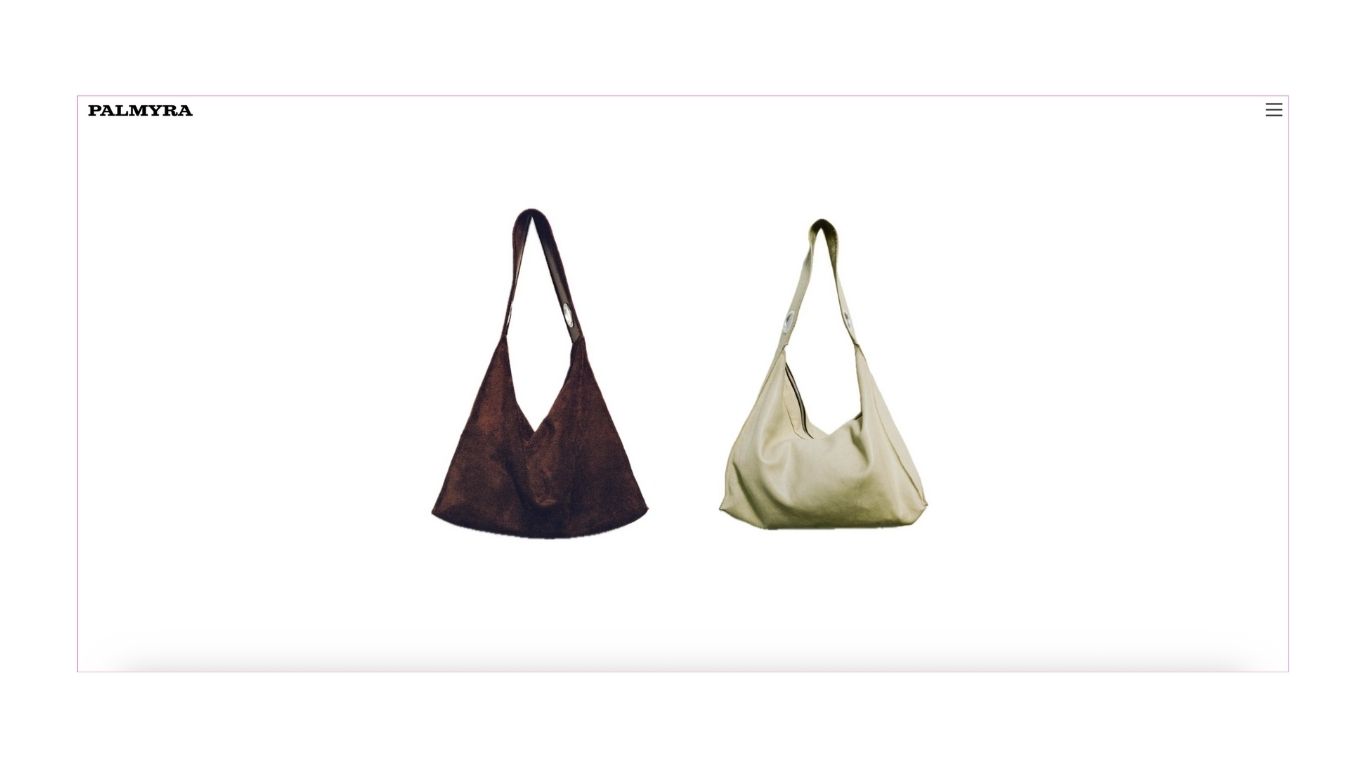
Alex: Oh my gosh, yes! Obviously, Cierra — I love her down. She’s so nice. I just had the privilege of overlapping with Alissa’s Magic. I have to shout out this brand, Palmyra, they’re these handmade, beautiful leather bags made here in Chicago. They fit your laptop. They’re like a chicer everyday bag. So that’s a brand that’s been really, really inspiring. And then all of my friends; if you follow me, you see we post them all the time, but they’re all doing amazing, cool, awesome stuff.
Ava: There’s nothing more fun than your friends being cool!
Alex: No, totally. I’m kind of like, “Wait, where’d that come from?” And it’s awesome. We get to just like, put all of our toys in the middle.
Ava: Completely!
Thank you so much for joining me. It was so nice to talk with you!
Alex: Okay, sounds great. Thank you so much!
—
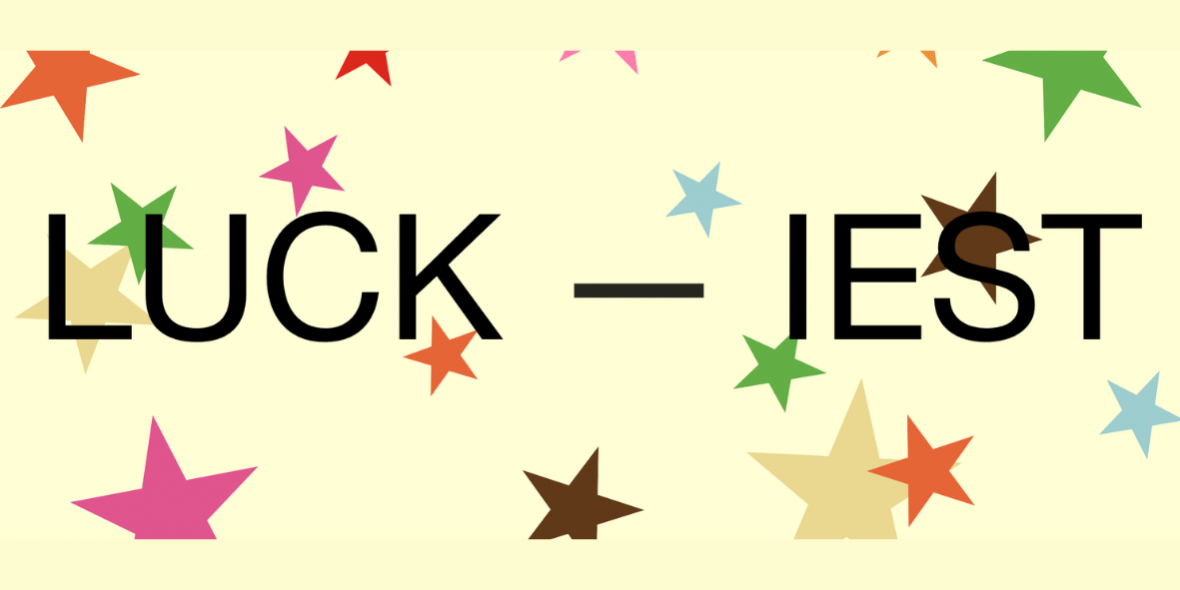
Since I’ve completed this interview, Alex has released @luck____iest, a collaboration project with Isabelle Estrin making your digital dreams come true: luck-iest.com
Check Alex out on Instagram @alexlucke