Cover Photo by Camryn Kim
Criterion Mobile Closet by Dylan Simmons
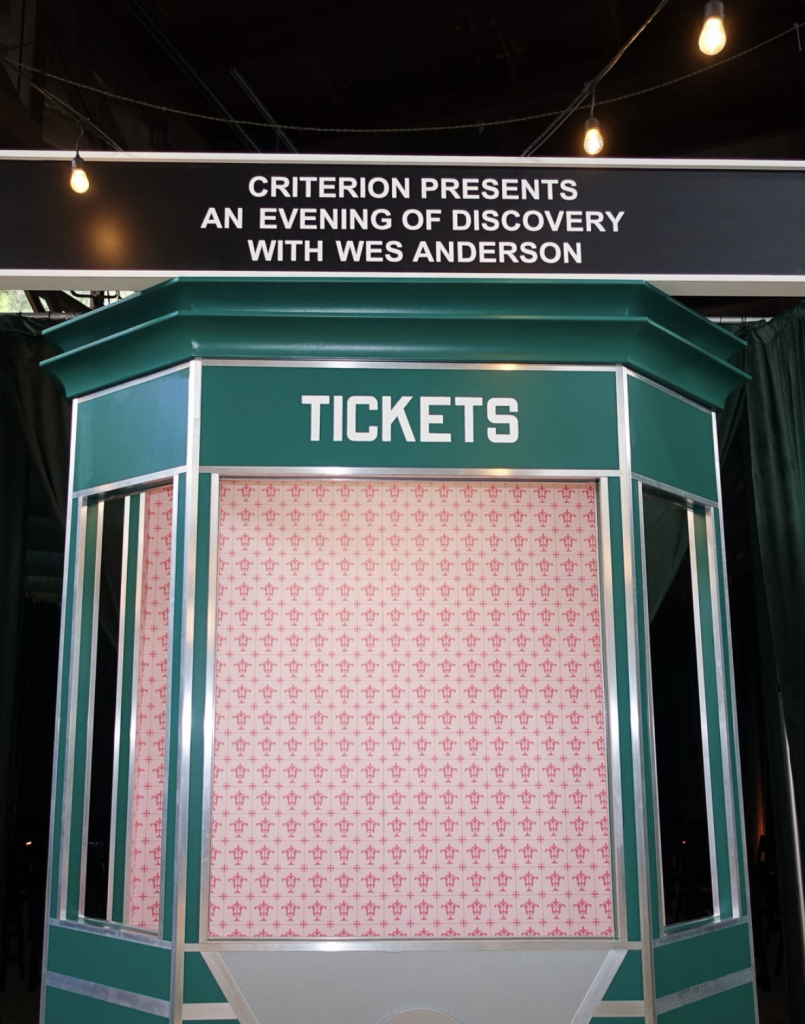
Paired with the Hollywood Bowl’s three-day celebration of all things Wes Anderson was a series of activities hosted by The Criterion Collection. The Criterion Collection is a curated selection of movies approaching two thousand titles, highlighting classics from cinema history as well as contemporary films paving the industry’s future. From high-brow indie films to cult classics to mainstream pop culture hits, The Criterion Collection helps to actively preserve film history in the ephemeral digital era. Each title in the Collection is made available for streaming and on physical formats like Blu-ray, preserved in the highest possible quality and with special add-ons like deleted scenes or interviews with the cast. The Collection is not just important to film purists, but to the industry as a whole, as it highlights globally diverse stories and storytellers, and protects the future of the medium itself.
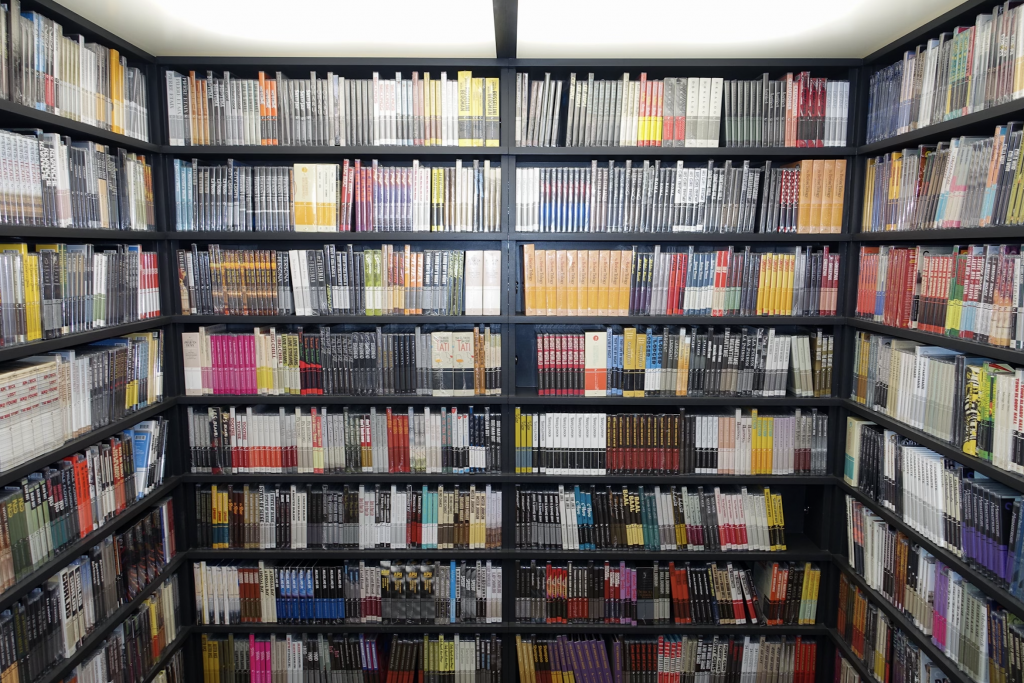
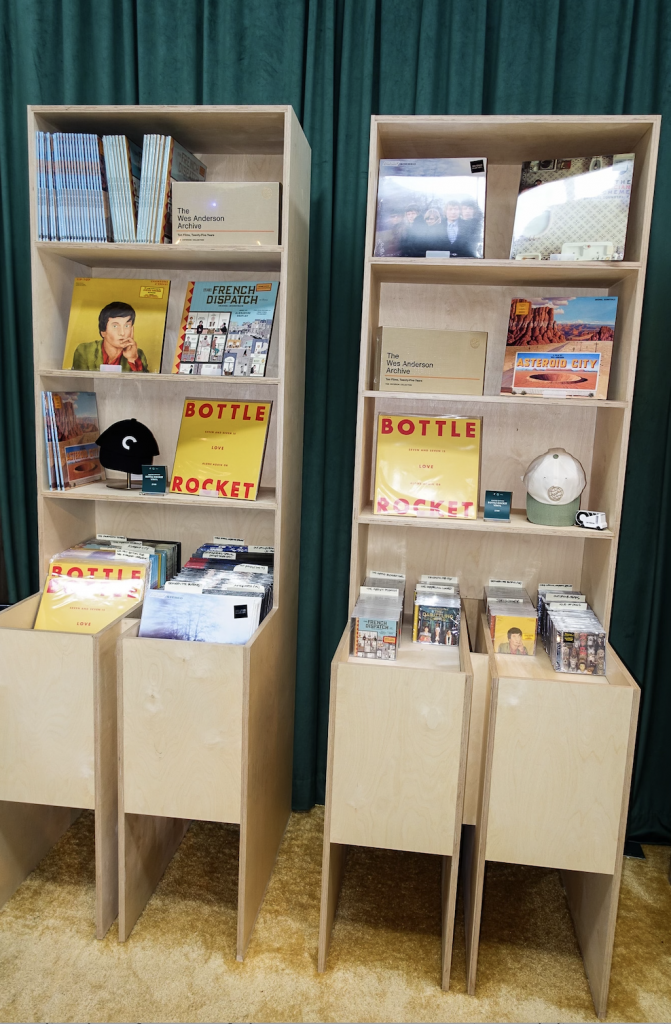
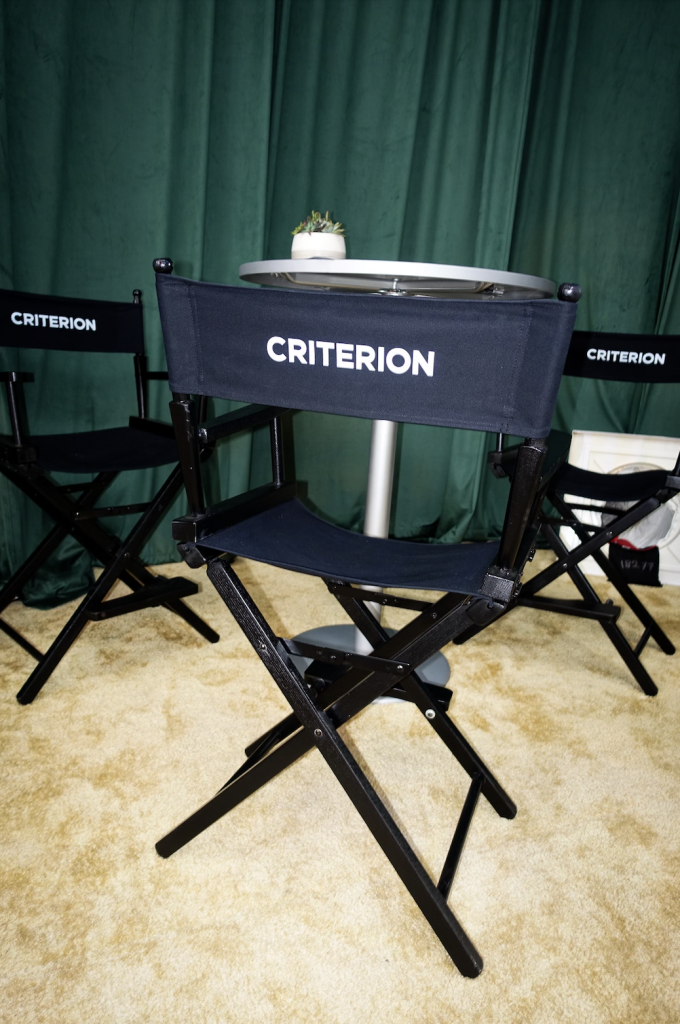
The Criterion Collection offers a box set celebrating Wes Anderson’s three decades of iconic filmmaking, from Bottle Rocket (1998) to The French Dispatch (2021). All ten films were available for sale at the Bowl, as well as CD and vinyl copies of their soundtracks. In addition to the Anderson-themed pop-up, The Criterion Collection brought a fan favorite to the Bowl: The Criterion Closet. The Closet is a “What’s in my bag?”–type experience typically reserved for interviews with celebrities, but on occasion, a makeshift Criterion Closet constructed on a mobile trailer travels from city to city to bring this elusive experience to fans.
Naturally, I jumped at the opportunity to check out the Closet for myself and indulge in my three minutes of fame. The Closet’s limited size still managed to fit the entire physical Criterion Collection, from which I made my three picks: Fantastic Mr. Fox (an obligatory Wes Anderson classic), Portrait of a Lady on Fire, and Mulholland Drive. And though I was wowed by the iconic Closet and the vast filmography it housed, I walked away from my experience inspired by the staff who made it all happen. My experience was guided by several Criterion staffers who seemed genuinely interested in getting to know me, my work at Radio, and — most importantly — which three films I would choose. Their genuine positivity and excitement about the experience was radiant, and they truly embodied their stated mission of bringing people together through film. In an age of AI threatening real artists, and corporate-owned streaming services turning movies into lost media at the drop of a hat, this experience reminded me not only of the sanctity of the art itself, but the enduring importance of physical media and of the passionate cinephilic community that sustains it.
Music from the Films of Wes Anderson by Kiara Mack
Photos by Camryn Kim
During the two years I’ve spent writing for UCLA Radio, I’ve covered concerts from pop superstars like Dua Lipa and Lorde, and yet I’ve never been as nervous to write about a show as I was attending Music from the Films of Wes Anderson at the Hollywood Bowl last week. Wes Anderson might not be a main pop girl, but as a self-proclaimed cinephile who grew up religiously rewatching Fantastic Mr. Fox and who firmly believes the acclaimed filmmaker is only getting better with time, the man who made The Royal Tenenbaums means just as much to me, if not more, than the woman who sings “Physical” or the woman who wrote “Liability.”
Over the course of three days this July (or as Beck dubbed it, “Wes Fest”) the colorful, symmetrical, eccentric cinematic and sonic world of Wes Anderson was brought to life at the Bowl. It was a dream come true for all the film nerds like me who could go on and on about Anderson’s mastery of miniatures, tracking shots, and, most importantly, needle drops. Putting such a magical experience and my unending love for one of the greatest to ever write and direct succinctly into words, however, seemed like a nearly impossible task. Luckily, I needed to look no further for inspiration than a humorous reminder from Anderson’s own love letter to journalism with 2021’s The French Dispatch: “Just try to make it sound like you wrote it that way on purpose.” Try, I will.
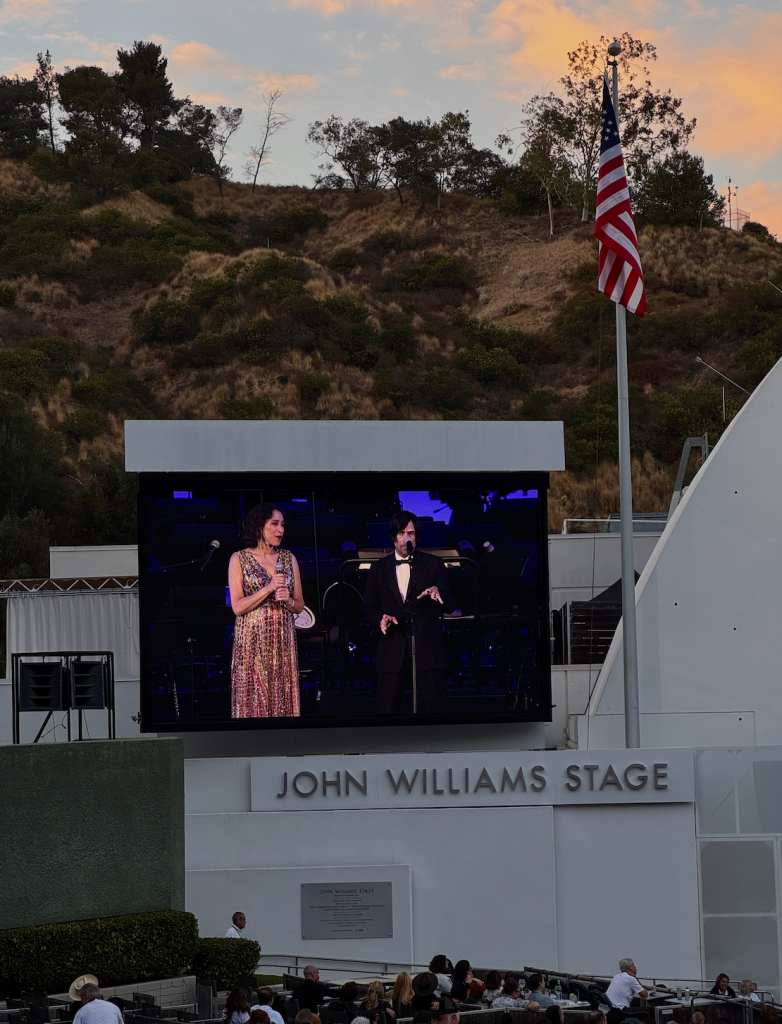
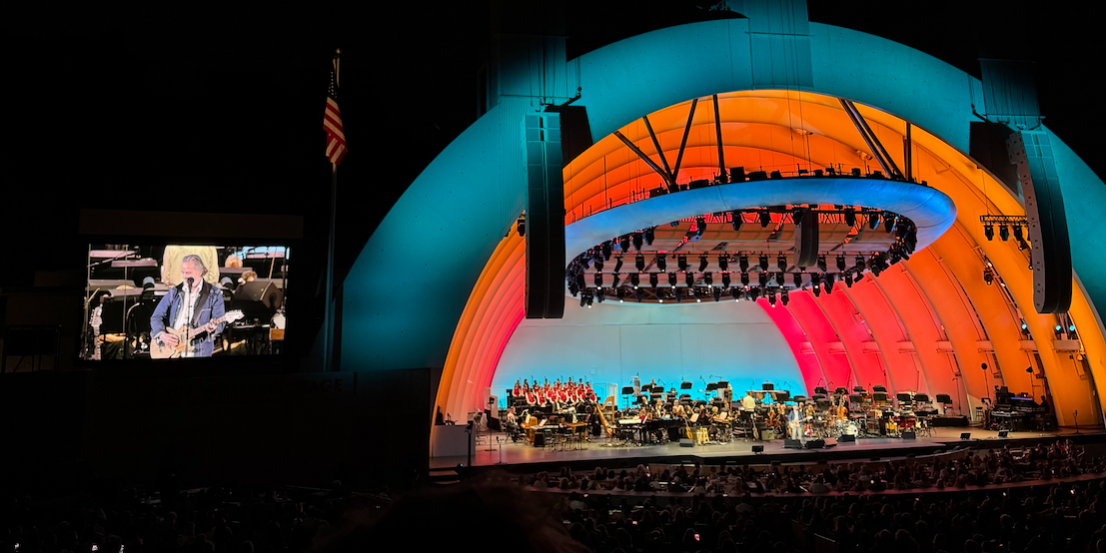
The picturesque sunset, soothing LA breeze, and barrage of bright red Steve Zissou beanies made the night feel like its own equally calming, equally quirky Wes Anderson movie right from the outset. Making their way into the Bowl to celebrate the beloved filmmaker was a crowd noticeably on the older side, likely having followed Anderson for all thirty years of his illustrious career. Fittingly, the passage of time was the main theme of the night, a touching reminder that time goes by and our bodies grow old but the art we create, the art that we connect with, and the people we share that art with will stay with us forever. Hosting the show and kicking off the night was longtime Anderson collaborator Bill Murray who walked on stage with a Zissou beanie and a blunt and began emotionally reminiscing about the people and the music who have helped bring his good friend’s vision to life over the decades. He set the tone, and the audience knew they were in for a treat.
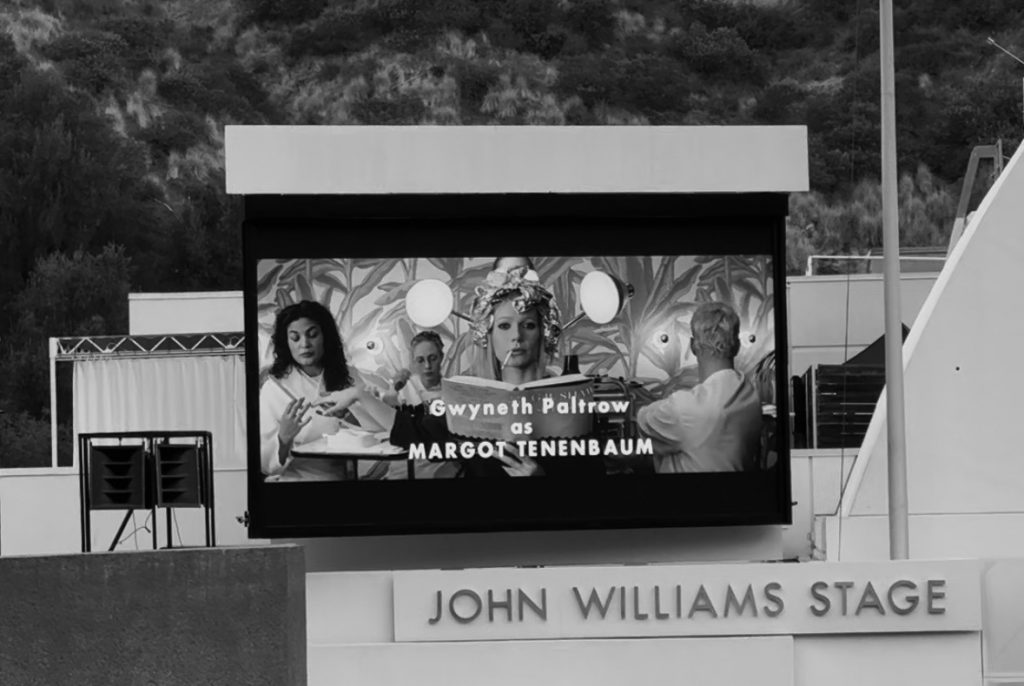
Artists were introduced by Anderson’s go-to actors like Rupert Friend and Jason Schwartzman and cycled on and off the stage so as to fit in as many of Anderson’s most quintessential needle drops as possible. Rogê sang “Zorro Is Back” from Anderson’s debut, Bottle Rocket, and Britt Daniel rocked out to “Making Time” from Rushmore. To honor Anderson’s aughts work, Beck covered Elliot Smith’s “Needle in the Hay” and Anderson’s first composer and lead singer of DEVO, Mark Mothersbaugh, performed some of his splendidly strange deep-sea sounds from The Life Aquatic. Karen Elson delivered a rendition of “Le temps de l’amour” in homage to Moonrise Kingdom’s unforgettable dance scene, and even Anderson’s more recent Asteroid City got its moment to shine as Jenny Lewis sang the infectiously charming “Freight Train.” Anderson looked on from the Bowl’s pool circle as the music from his films were brought to life live and all at once. Accompanying clips from his films occasionally played on the Bowl’s big screens, but only briefly, as it was the music that took center stage. An opening note, lyric, or title was all the audience needed to recognize and applaud the exact moment being brought to life, a testament to the brilliance of Anderson and his collaborators.
Even with a lineup filled with magnificent singers however, it was the instrumentalists who shined brightest. The Los Angeles Philharmonic conducted by Thomas Wilkins was a constant throughout the show, rounding out Anderson’s unmistakable musical world. A highlight of the night was LA Phil violinist Bing Wang’s tearjerking rendition of Georges Delerue’s “Adagio” which brought to mind a story in The French Dispatch about a fallen student protestor and the subsequent commodification of his life. Additionally, Anderson’s affinity for exploring and honoring other cultures through his films was made evident by the range of countries and styles represented on stage during these instrumental sections. The Ukrainian Mosaic Orchestra performed pieces from Alexandre Desplat’s Oscar-winning The Grand Budapest Hotel score, Kaoru Watanabe led a taiko drumming performance in reference to his work on Isle of Dogs, and Rajib Karmakar and Aakash Pujara honored the Satyajit Ray compositions featured throughout The Darjeeling Limited.
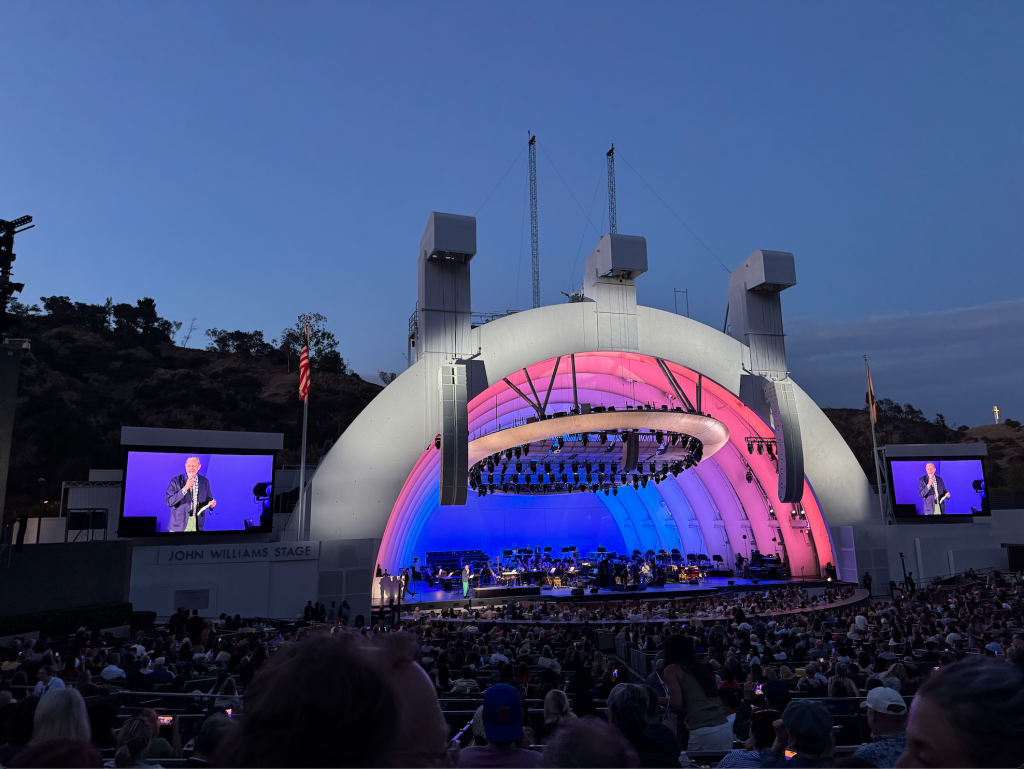
Fitting all of Anderson’s iconic needle drops or Desplat and Mothersbaugh’s brilliant compositions into one night would have been a futile attempt, so listing off every omitted track would be similarly pointless. Though the absence of Brazilian musician and actor Seu Jorge and his David Bowie covers from The Life Aquatic was admittedly felt, just about everyone and everything else was able to fill the hole he left behind. When Jeff Goldblum and his jazz band are improvising to “Blinuet” in a tribute to Rushmore, you can’t help but sit back and smile. As Bill Murray accurately remarked, “I think this is the coolest place in Los Angeles right now.” At a time when the rich and greedy in this industry are adamant that AI is the future, these shows served as moving reminders that human creativity and collaboration alone are what grants art the ability to transcend time, space, and language. When a group of humans makes something for another group of humans to enjoy, that’s where the best of humanity lies.
The blend of humor and nostalgia through the night’s banter and remembrance was appropriately evocative of Anderson’s own meditations on time and grief, his tendency to find light in the darkness and darkness in the light. One second you’re laughing at Rufus Wainwright playfully covering “Where Do You Go to (My Lovely)” and the next you’re being struck with a wave of sadness over Jim James covering “The Wind.” The star-studded night was filled with stellar music and moments like those, but nothing came close to the perfect highs brought about by Jackson Browne. Anderson took it upon himself to introduce Browne, sharing that the inspiration for The Royal Tenenbaums and its lessons in regret came from Browne’s writing. “The Fairest Of The Seasons” and “These Days” — written by a then 16-year-old Browne — were performed by him now at 77. Before going into “These Days,” he joked, “I heard this song in The Royal Tenenbaums, in the same way you did, in the theater. I’d forgotten that I’d licensed the song.”
Browne’s amusing stories and timeless voice stopped the show and stopped time, but the sixty years between then and now added another layer to his performance, a poignant display of the ways in which our dreams and fears stay with us all our lives, for better or worse. That “the time is always wrong” is a sentiment Anderson is still grappling with in his films twenty-five years later, but in recent years, he seems to have found his answer — “Doesn’t matter. Just keep telling the story.” He keeps telling his stories, keeps finding ways to use music to aid him in doing so, and witnessing the next thirty years of his career will surely be a sight to behold.
The wonderful night of music and movies came to a celebratory close with Anderson, his family, and his film family coming together to sing Faces’ “Ooh La La.” “I wish that I knew what I know now / When I was younger,” the artists and audience members cheerfully sang in unison. In the context of the song, those lyrics take on a relatively regretful tone, but in the context of Wes Fest, they came with a rush of joyful nostalgia. A young Anderson working on his debut film thirty years ago could have never imagined a career and a weekend like this, but his singular eye for cinema, whimsical vision for the world, and love for community and collaboration have resulted in a thirty-year filmography that has already cemented him as one of the filmmaking greats. The Academy and the box office will never be able to capture the true scope of Anderson’s legacy, and Wes Fest proved it.
For those lucky enough to find Wes Anderson’s films in this lifetime, his characters, his dialogue, and his music will stay with them forever. That’s a hell of a legacy all on its own, with a stellar soundtrack to boot.