UCLA Radio is always working towards a better understanding of music history and the artists that have shaped the modern sounds we love. In an effort to highlight genres and artists who have influenced generations, our digital press department decided to revisit selected playlists from our music department’s playlist series for Black History Month.
Disco – Mya
Playlist made by @alexxbrookesss and graphic by @chztlm
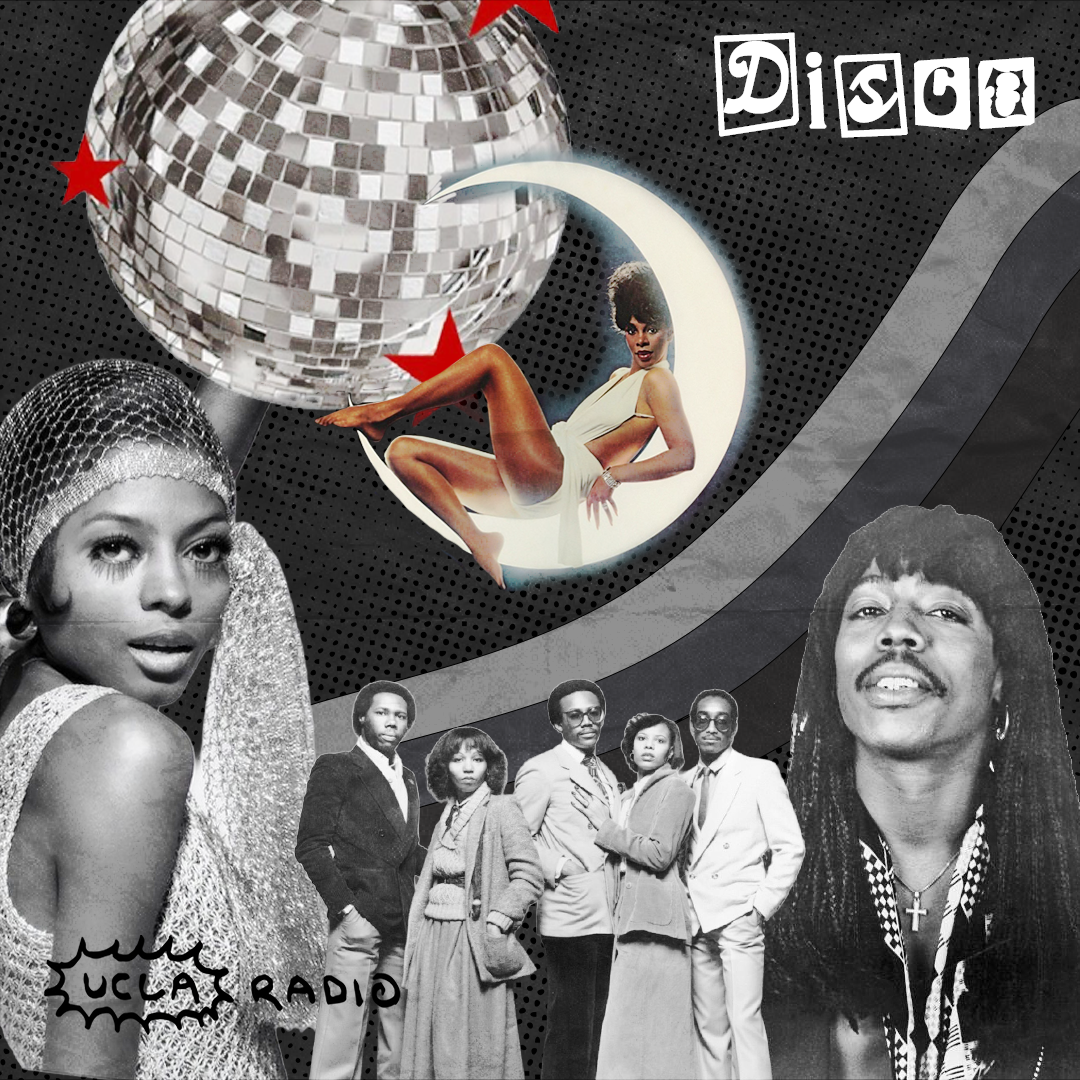
In the early 1970s, amidst the Stonewall riots, growing dissent against the Vietnam War, and an acute disillusionment with the American establishment, a glittery, vivacious form of joyful resistance emerged: disco. Though disco was, like most other popular music, concerned with themes of love and relationships, the genre as a whole was a monument to the art of loving. The art of loving your partner, your people, and yourself — and for disco, to do all of these things at once was a cause for a high-octane, psychedelic celebration.
Sonically, disco evolved from the pop-adjacent soul music produced by labels such as Motown and Stax Records, and the fledgling genre of funk that emerged in the mid-to-late 1960s. The genre also reflected the stylings of European and Latin dance music. Alongside heavy baselines, electric instrumentation, and energetic beats, disco would become one of the first genres to rely heavily on synthesizers to create a unique sound. Additionally, it was not producers or singers pioneering the sound of disco, but disc jockeys as well. Earl Young would pioneer the iconic “four-on-the-floor” drum beat that was a defining characteristic of the genre, and was one of many celebrity DJs to emerge from the era.
In New York City, on Valentine’s Day, 1970, disc jockey David Manusco hosted what he thought might be a profitable rent party in his loft apartment, but would instead become an underground revolution. Manusco’s party was a private event, and unlike many other gay bars and dance clubs, gay men could dance together freely without worrying about police harassment. From then on, The Loft became a safe haven for Black, Latino, and gay communities looking for a good time, and was also the place where young disco DJs such as Larry Levan, Frankie Knuckles, and Nicky Siano honed their skills. The party continued to grow, with many artists crossing over into the dazzling world of disco, and many more private venues, such as the iconic Studio 54, opening up. Donna Summer became the undisputed queen of the genre with her groundbreaking disco anthem, “Love to Love You Baby,” in 1975. In the same year, Carol Douglas released the pioneering hit, “Doctor’s Orders,” and one year later, Diana Ross would release one of many chart-topping disco tracks, “Love Hangover.”
Legendary arranger of Village People’s 1978 disco anthem, “Y.M.C.A,” Horace Ott once said about the decade-defining genre, “If you think about it, Black music was always dance music. So, we didn’t need the word disco. That was a word that was made up by other folks.”
Soul – Kayalani
Playlist made by @bahjisteel and graphic by @oliverrs.jpg
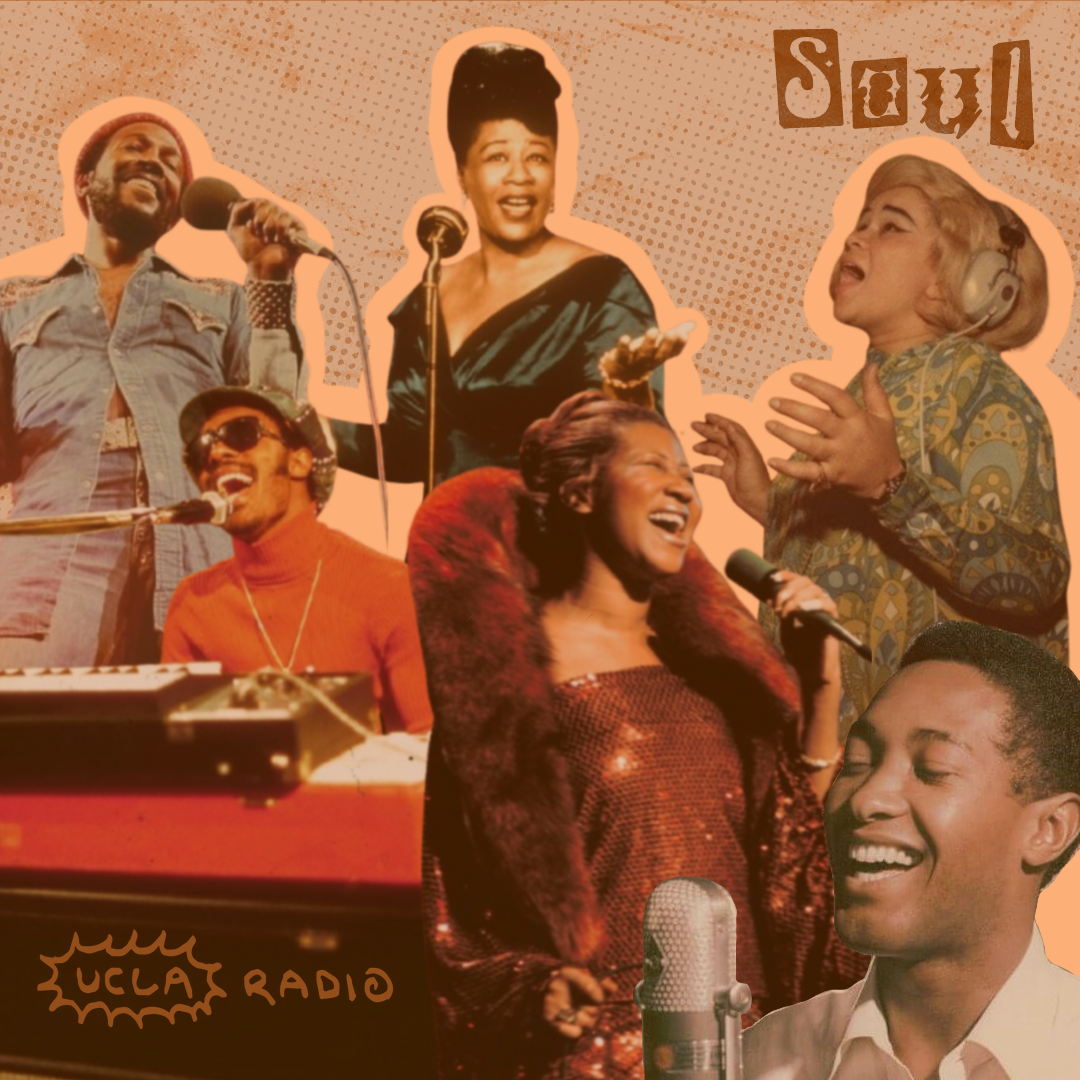
Rooted in the sonic storytelling of gospel and pulling from rhythm and blues, soul music empowered mid 20th century advocacy and has left a musical mark that will surpass us all. Soul is often characterized by full vocals, brass horns, and lyrics focused on community and empowerment. But beyond the infectious melodies of acts like Curtis Mayfield and the catchy choruses of Motown, soul music is no stranger to social activism.
We can’t discuss the genre without mentioning the legendary “Queen of Soul” Aretha Franklin, whose voice and expansive discography have shaped the music industry. Hits like her interpretation of Otis Redding’s “Respect” demand racial and gender equality, while “(You Make Me Feel Like) a Natural Woman” and “Chain of Fools” dive deep into the complexities of love and loss. The “King of Soul,” Sam Cooke, also impacted music far and wide, notably writing the renowned “A Change is Gonna Come,” which became a civil rights anthem, sparking resilience and strength in times of hardship.
Soul music undoubtedly influenced the music scene for generations and genres to come. Elements of it can be heard in the grooves of funk, heavy bass in rock and roll, and even the emotional intensity of modern-day pop. What makes soul music so powerful for me is the rich, raw, and often improvised vocals atop elegant orchestration, giving emphasis and strength to the messages and sensations we hear.
Soul music can be heard time and time again in media and is remixed by current artists because, at its core, soul is all about storytelling and unity — the perfect manifestation of any art.
Jazz Rap – Justin
Playlist made by @_vidhu.v_ and graphic by @lenachoiii
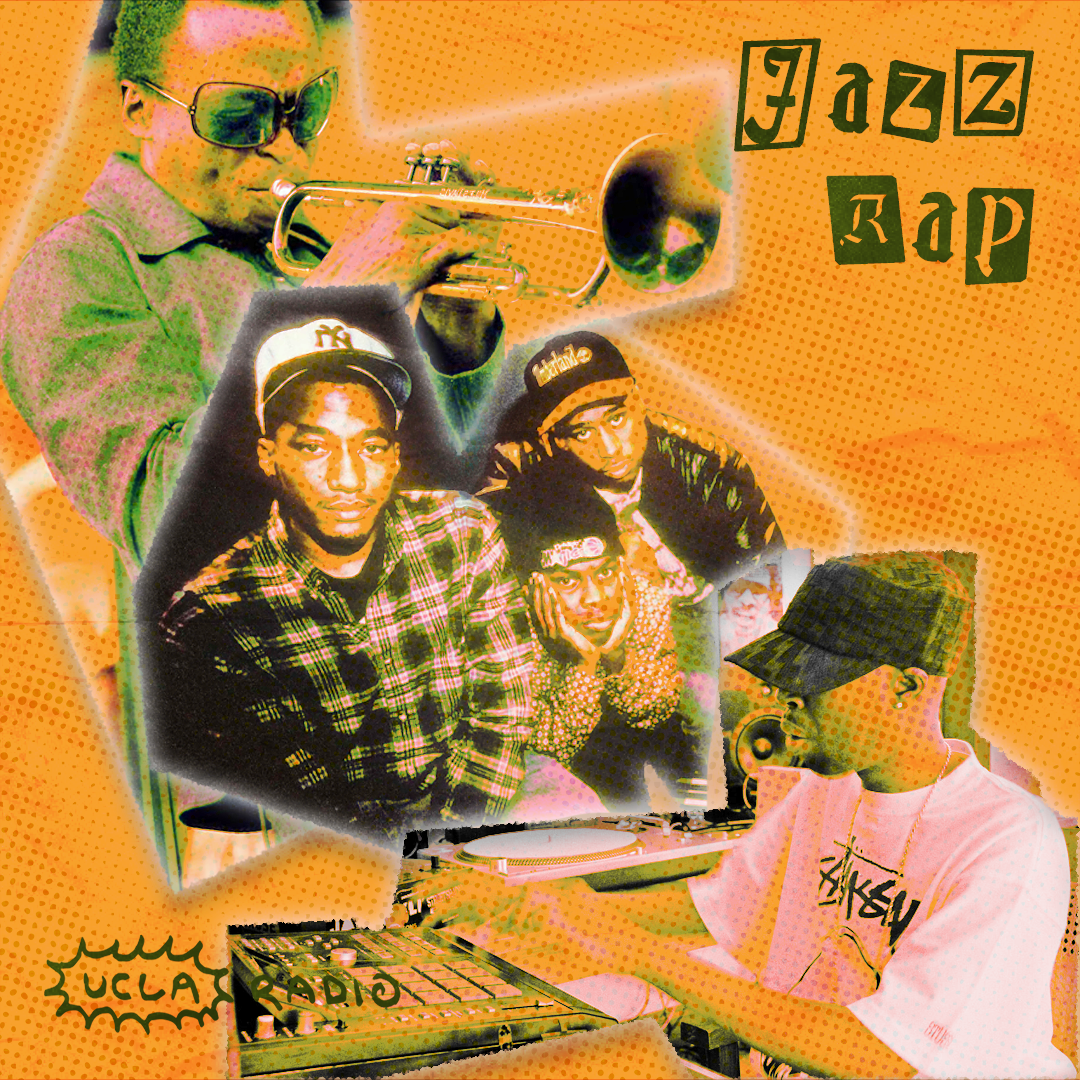
Characterized by repeated jazz loops created through samplers and by conscious, reflective lyrics that distinguished it from the “street talk” of violence, money, and materialism, jazz rap emerged in the United States in the late 1980s. Compared with the aggressive and direct style of contemporary hardcore rap, jazz rap placed greater emphasis on intellectual reflection and artistic expression. Its musical materials were often drawn from cool jazz and soul jazz, and through sampling techniques, artists incorporated the timbres of instruments such as the saxophone and double bass into the rhythmic framework of hip-hop.
An early signal of jazz rap came in 1988 with Stetsasonic’s “Talkin’ All That Jazz.” The song defended sampling while pointing directly to jazz as one of hip-hop’s musical roots. A few years later, A Tribe Called Quest’s 1991 album The Low End Theory gave the style its defining sound. The record leans heavily on jazz textures, deep bass lines, loose drum grooves, and wandering saxophone samples. Tracks like “Jazz (We’ve Got)” simply say out loud what was already obvious about Tribe’s approach. Q-Tip and Ali Shaheed Muhammad were obsessive record diggers, pulling fragments from old jazz recordings and reshaping them into something new. On that track, the horns and bluesy mood come from Jimmy McGriff’s version of “Green Dolphin Street,” drifting underneath the relaxed back-and-forth of Q-Tip and Phife Dawg. The conversation between jazz and hip-hop didn’t stop there. Kendrick Lamar’s To Pimp a Butterfly shows how far the connection can stretch. The album features musicians like Thundercat, Terrace Martin, and Robert Glasper, bringing live jazz players directly into hip-hop production.
Jazz hip-hop also traveled well beyond the United States. In Japan, producer Nujabes became one of the most influential figures in the genre’s global spread. Through his Tokyo label Hydeout Productions, his sound was built on soft piano loops, warm jazz samples, and unhurried beats. Tracks like “Feather” and the Luv(sic) series carry a quiet emotional pull. Another Japanese producer, Kenichiro Nishihara, approached the style from a slightly different angle, blending traditional jazz harmony with modern hip-hop rhythms in projects like the Humming Jazz series.
Looking across its history, jazz hip-hop works because the two genres share the same instinct: reuse, reinterpret, transform. Jazz musicians turned show tunes into standards. Hip-hop producers turn records into new songs. As saxophonist Kamasi Washington once put it, both forms come from the same energy: repurposing music to express who we are.
Blues – Mya
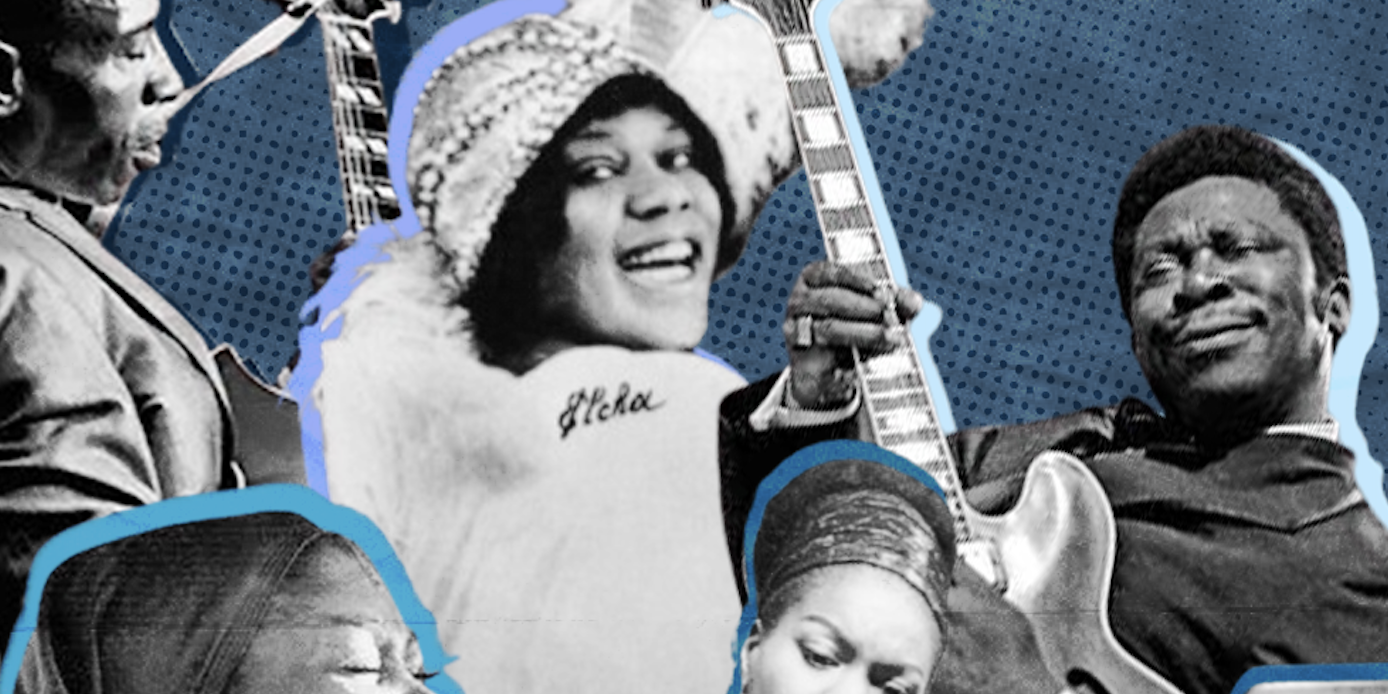
Playlist made by @b.arefaine and graphic by @_natqlie
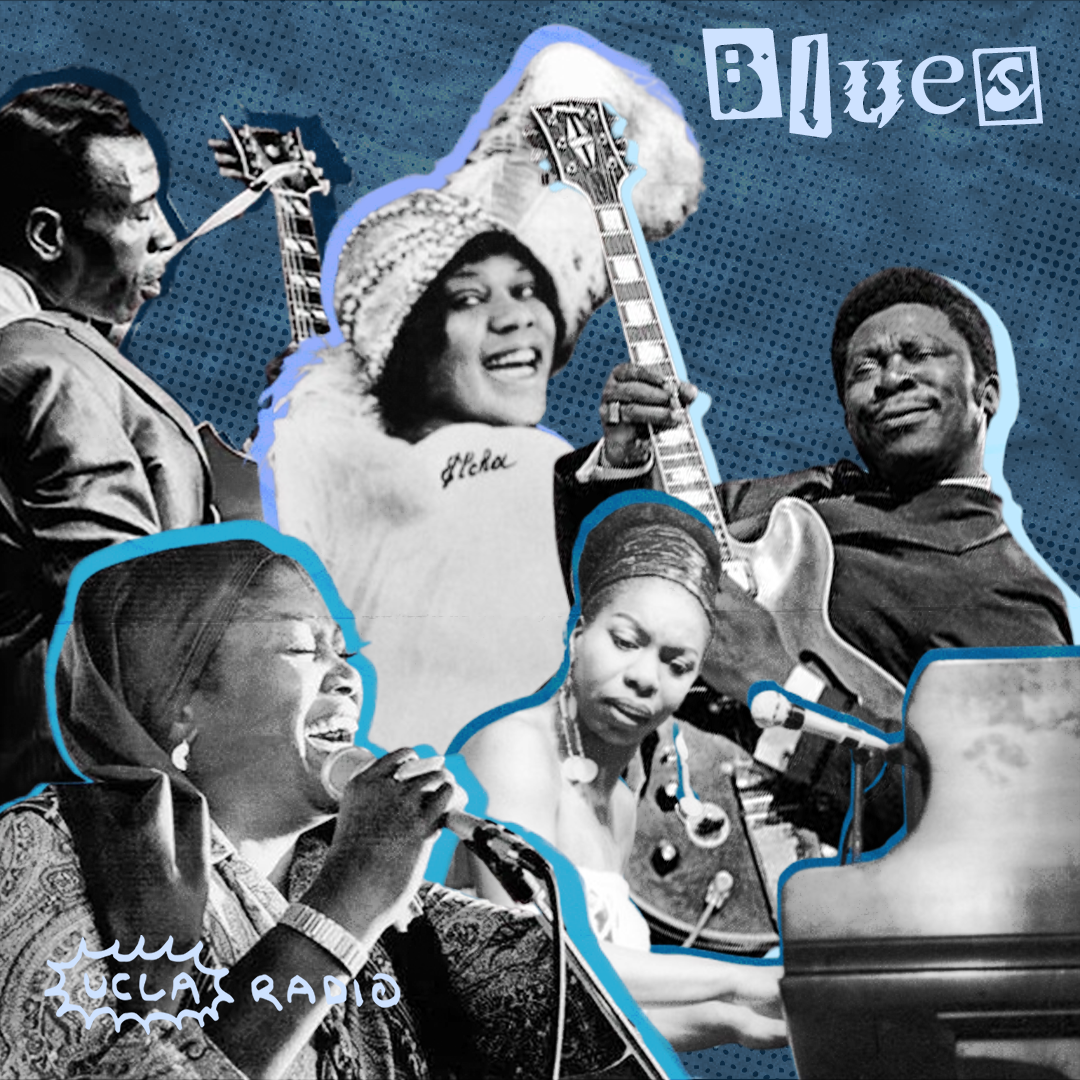
When you listen to B.B. King’s “Chains and Things” or Bessie Smith’s “Downhearted Blues,” you’re not just listening to an individual narrative; you are listening to a heritage. You are listening to the legacy of West African praise singing and string songs, to the Corn Ditties of enslaved Africans on the Mississippi Delta, to the Black Spirituals sung in churches and in work fields. Although the roots of the blues stretch back to pre-colonial West Africa, the commercial foundation of the genre came out of the Great Migration of the early 1900s. African Americans, in search of better career opportunities and to escape the racial violence of the South, migrated to urban centers in the Northeast, Midwest, and West.
For some Black Southerners, the Great Migration was also an opportunity to become recording artists. Because of its burgeoning Black population and record industry, Chicago became home to what would be known as the “urban blues” (sometimes referred to as the “Chicago blues”). McKinley “Muddy Waters” Morganfield grew up a sharecropper in Mississippi (like many blues artists of the 20th century, including B.B. King, Charlie Patton, and Rubin Lacey), and became the father of Chicago blues in the post-WWII era. He would go on to make chart-topping hits such as “I Can’t Be Satisfied” and “Rollin’ Stone,” the latter of which would become the inspiration for the British rock band, the Rolling Stones, and for the influential music magazine, Rolling Stone.
Musicologists have tracked numerous subgenres of the blues, including Delta blues, Piedmont blues, country blues, down-home blues, harmonica blues, and so on. However, the key characteristic most of them share is the central focus on a strong, evocative voice. Some blues songs had more sophisticated instrumentation with guitars, pianos, saxophones, trombones, and harmonicas, while others remained simple or were even sung a capella; regardless, the voice was always central. blues adapted to the cities it spread to. In Chicago, where Watters and many other Black blues musicians landed after WWII, newer electric instrumentation was incorporated. Meanwhile, in Memphis, horns, driven beats, and electric guitars would transform the Delta blues into a new and innovative sound that became the bedrock for major soul record labels such as Stax Records.
Men and women played very distinct, yet pioneering roles in spreading the blues across the country. Women like Gertrude “Ma” Rainey were deemed the “Mother of Blues” as she bridged the gap between the older country blues with newer expressions of vaudeville and cabaret performance, as well as jazz. With each iteration and renaissance, the blues continues to demonstrate the endurance, resilience, and ingenuity of Black music, as one of the oldest and most influential folk traditions in America and the world over.
Check out the remaining of the Black History Month Playlists here:
Afrofuturism
Playlist by @rabbitsmoon24
Afrohouse
Playlist by @livmaes
Underground Rap
Playlist by @drew.arons