
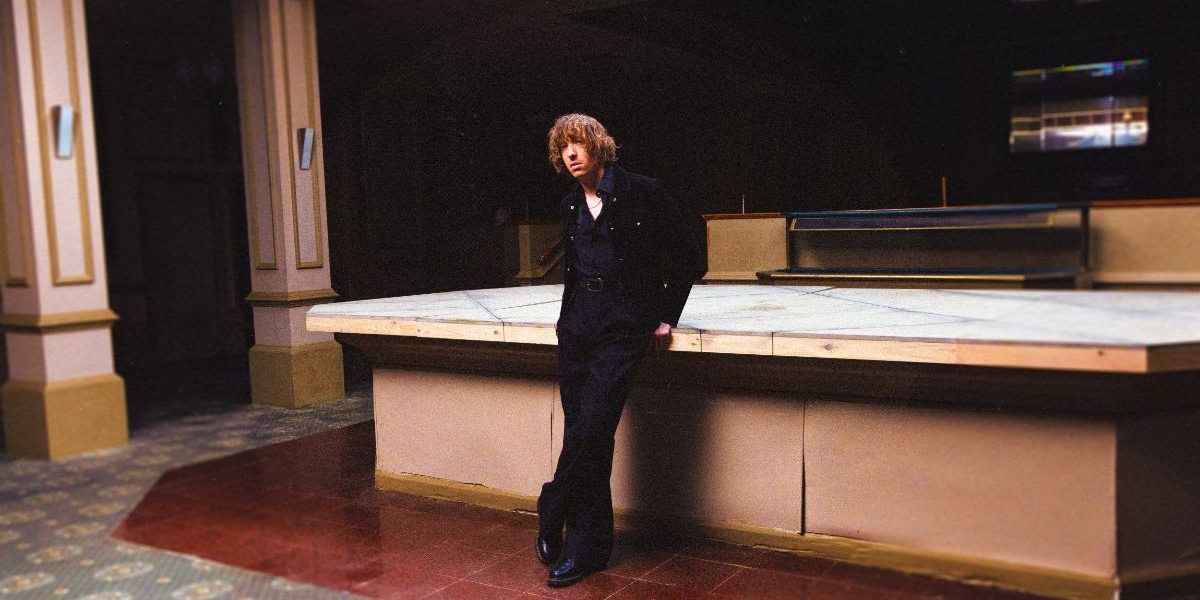
Photos provided by Pitch Perfect PR and Sylvia Ansley
Techno virtuoso Daniel Avery wants to transport you to a world outside your own. Forging a path between the enveloping sound of shoegaze and the never-ending groove of electronica, he aims to create an experience that bridges two worlds of musical rebellion. Originally from the UK, Avery has toured across the world, bringing his music to clubs like Fabric, Berghain, and now to The Independent, where I had the pleasure of seeing his performance last Friday. On this tour, Avery is celebrating his most recent album, Tremor, and to do it justice, he’s assembled a band of talented musicians to bring his vision to life on stage. I got the opportunity to sit down with him and pick his brain before the show.
—
Interviewed by Sylvia Ansley on September 18, 2026. This interview has been edited for clarity & brevity.
Sylvia: Thank you for joining me today. Let’s just go into our first question. I think there are two levels to assigning a musical genre to something. There’s what inevitably goes on your Wikipedia, which is not inherently wrong. And then there’s a more self-determining genre assignment. Your music has really had some range over the years, so I’d like to give you a chance to just kind of self-define your music.
Daniel Avery: I appreciate you asking the question because it’s something I ask myself all the time. I think I’ve always been drawn to the idea of light emerging from darkness, whatever that might be. Hope emerging from fear. When it comes to music, I’ve always been drawn to noisy, distorted music, whether that’s heavy techno or distorted guitars, fuzzy guitars, or kind of electronica that has a sort of level of a cloudy haze to it, but beneath all of that is always melody or a hook or something to hold on to. Something that can take you into another world of some variety.
Sylvia: Wow, I liked that. As someone with an ever-evolving discography, I’m assuming you have an ever-evolving list of musical influences. I find that the “What are your influences?” question is a little dry, so instead I will do a bit of a fact check because, while doing my homework, I stumbled across two listed influences that really struck me personally.
Sylvia: The first one is, of course, My Bloody Valentine because of the legends that they are. How does it feel to be represented by the same PR group as your early music inspirations?
Daniel Avery: It’s, I mean, it’s the kind of thing that my childhood teenage self never would have believed. To share that label, and I mean, My Bloody Valentine has been an influence from the very beginning and remains so. So yeah, it’s nothing but an honor to share some kind of stage for them. They’re one of these sort of like mythical creatures, and I want to keep it that way.
Sylvia: Oh no! My next question is if there was a chance you’d work collaboratively in the future!
Daniel Avery: I think there are a few people, and they’re definitely one of them. I would choose never to meet them because their music sounds otherworldly, and they do feel like sort of alien creatures. I say that in a positive way. I kind of want to keep it that way. I do still like the mystery of music that I like. The same could be said for someone like David Lynch, who obviously is sadly gone now, but I never would have wanted to meet him because I want to maintain that distance and keep the mystery of what they do intact.
Sylvia: David Lynch was definitely an alien.

Sylvia: My second fact check is admittedly more of a personal thing. While doing my homework, I saw that one of your listed influences is the band Kyuss. I couldn’t believe it. Could you point to an aspect of their sound that you feel is reflected in your music? I’m so intrigued by how you mesh those two.
Daniel Avery: My first sort of love, my first musical discovery as a teenager, was that world of stoner, heavy desert rock, whatever you want to call it. And Kyuss was right up there for me. They came from, you know, loving bands like Nirvana, and then getting deeper into that sound. And I could talk about that all day because, for me, let me slow down because I want to talk about too much here. But it’s why I picked up a bass guitar, which is how I first went into music. Kind of simple, unapologetic repetition in their [Kyuss’s] music, which I would later discover. I could also draw a line to my love of techno music: simple hooks, unapologetic repetition that get you locked inside a groove, keeps going and going, heavy but warm heavy. That’s a phrase I often use because you know it can feel heavy and distorted, but you want to get lost inside this world. Josh Homme’s idea of desert sessions… was a real inspiration for my album Tremor, which came out last year. The desert sessions idea was really appealing to me. That you can hole up in a place, everyone comes through, and you try and make something that none of you would make on your own, without it being totally collaborative, and just go with it. I didn’t set out to make a rock-leaning record. It just kind of happened. And but I think it was inevitable because all of those influences were so ingrained in me from a young age. It’s funny because people have asked me, ” You began with rock music, so why didn’t you make it?” “Why is it taking this long for you to make a rock-leaning record?”
Sylvia: I mean, the power of your environment also really matters with that stuff. Maybe if you had fallen into a more rock-leaning institution in your earlier days, maybe that would have happened quicker.
Daniel Avery: Absolutely, yeah.
Sylvia: That was awesome. I was really intrigued as to what you were gonna say to that because I had my own ideas, and that was far from what I expected.
Daniel Avery: Tell me what yours were.
Sylvia: I mean, I thought a little less about origin and method and more about environment and rebellion. I think your music is fairly rebellious, and you talk about pushing your music quite a bit. That spirit of the desert and the birth of something new that no one has seen is very rebellious, but I hadn’t considered the collaborative process that you were talking about.
Daniel Avery: I really appreciate you saying that because that is something that I would never have thought about as a kid. There’s a massive correlation between those guys setting up a sound system in the middle of the desert and just playing gigs for days at a time and what people are doing with rave and techno music. It is rebellion, positive rebellion.
Sylvia: That’s one of my favorite things about music.
Sylvia: Let’s come back to you. I want to hear about your music. Okay, so I’m not a musician, unfortunately, but I assume that creating songs is kind of like having children. There’s a whole process of creating and raising and then freeing them into the world, right? Some songs turn out to be kind of like golden children, where you’re like, “Oh my gosh, I love them so much. And some songs just must stick with you like a bad child. I’m wondering if you have a song or two or three that are your favorites. They don’t necessarily have to be your biggest songs, and then maybe a song you have a bit more of a negative relationship with, because not all creation is positive sometimes.
Daniel Avery: It’s a great question, and I’m going to somewhat politely disagree with it. Two things. One, you say you’re not a musician. I can tell you from experience that you are, and everyone is. That’s a real firm belief of mine. That everyone has it inside them. I didn’t study music. I just was a huge music fan, and granted that I’ve had many very fortunate circumstances and breaks in my life. You might not have got it down out into the world yet, but you are.
Daniel Avery: That leads me on to what you said next: is that, of course, there are golden children, but the older I get, the more I realize that things that maybe at one point I was like, “Oh, why do I make that choice? Or why did I put that out into the world? They’re all positive. They’re ultimately all positive, and it’s like a it’s like a journal. You know, if you were to go back and read your journal, there are going to be days where you thought, “Why did I think that?” They all form who you are in this present moment. And that’s taken me time to get to this stage. There have definitely been moments in my younger years where I was kind of dismissive of some of the things I’ve done, but now I feel very at peace with it all, and even more than that, I feel very proud of everything.
Daniel Avery: There have been moments in my career, especially when I was younger, where I felt as if I didn’t fit in, and I felt that it was due to my lack of output or missteps. Of course, as I get older, the more I realize that sticking it out is what makes you you, and I am proud of it. I feel as if I’ve never really fit into a scene, as it were, and that has troubled me in the past. I will admit that, but now I sit here, and I’m very happy with whatever corner I reside in, you know.
Daniel Avery: But yeah, actual tracks. Let’s go for it. I mean, the obvious one is “Drone Logic” because that just broke through, and people still talk about it now, and it was made what year are we in now? It was made like 14 years ago. I’ll pick something off the latest album, Tremor with Alison Mosshart is such a lovely full-circle moment for me. I was such a huge Kills fan, and to have her on this track of mine really feels like so many elements of me coming together in one thing. And then I also am going to pick something off the album Illusion of Time I made with Alessandro Cortini from Nine Inch Nails because I’m really proud of that record, and that ambient, droney, but still noisy side of me is so important. And I really feel as if that sort of was a real pivotal moment in my career because I really hate the word career in my… journey. Problem children, I don’t know, but I don’t think I have any. That probably sounds a little trite, but I’m sticking with it,
Sylvia: You’re a benevolent parent. It’s great to live with no other regrets. You mentioned your album Tremor. Are you touring for the album, or is this just a continued celebration of the project?
Daniel Avery: I formed this band; this live tour that I’m doing is in honor of the album Tremor because I felt like I had to honor that record by forming a rock band, but it still has very much a techno heartbeat
Sylvia: Oh exciting! I didn’t realize that.
Sylvia: I’m interested in how your more recent pieces came to fruition. This is me making some assumptions about your music, so please correct me if this is incorrect. When looking through your earlier music, I kind of recognize that, like, salvaging and scrounging faor samples and the act of mashing things together in that original, traditional DJ sense that we all think about. I’ve noticed a departure from that in your most recent album, in what feels like more of a ground-up approach. And this is where I’m saying I’m making an assumption. I have no idea if all of your music has been like this from the beginning, but I think that the incorporation of lyrics really exemplifies that, and I was wondering if – and I’m giving some examples: “Rapture in Blue”, “Greasy Off the Racing Line”, and “Ghost of Her Smile”, to name some were these your “brain children” – did you seek out vocalists, or did they come to you to elevate their vision?
Daniel Avery: Yeah, so it’s both. It’s really why I’ve been saying things it’s very much for the techno heads, but it’s equally for the shoegaze kids and the rockheads, so I feel like I’m all of those fans. So yeah, it’s everything really.
Daniel Avery: Yeah, I guess in the early days, just starting out, I guess it was more looking around for samples and so on. But then again, I’ve actually used very few samples over the years because what I’ve always liked to do is sort of create my own samples and then sort of steal from my own work. That’s happened quite a lot over the years, taking elements of tracks and transposing them into other things. But you’re right in that this one is, you know, the idea of just having singers is something I started to explore a little on the Ultra Truth album before, but I’ve really gone to town on this one. It’s very much my project, and I’ve sought out these collaborators just because they’re all people I really admire. I trusted all of them with the work: the lyrics, the vocals. I trusted them. So I didn’t write the lyrics. I was keen for that to be the case, because I wanted their fingerprints all over it as much as mine. You know, it was very important for me.
Sylvia: I’m attending your show at the Independent this Friday. I’m very excited. I’m a big techno and shoegaze person, so I’m really excited. Can you give me a sense of what I should expect? You caught me off guard saying that there’s gonna be a full band. I was wondering if it’s gonna be a hypnotic techno dance or an ambient kind of droning vibe. I want to know: should I wear my dancing techno heels or should I wear my kind of comfier introspective Doc Martens?
Daniel Avery: That’s a great question. I’ve never been asked what footwear to wear, but that’s a great question because it matters. It’s a bit of a hack answer, but the truth is, it’s all of the above. It has a techno heartbeat to it, and some moments are straight-up rave, but there are also moments that have a sort of dreaminess of a shoegaze gig. It’s all of it, but it’s definitely intense. And that’s what I wanted. I love DJing, but this is not a DJ set for me. DJing is all about the hypnotism of it and getting lost in it for hours. This is a gig that’s an hour and a bit long, and it’s an intense shock to the system, but in a good way. I’m super proud of the band we put together. It’s really exciting.
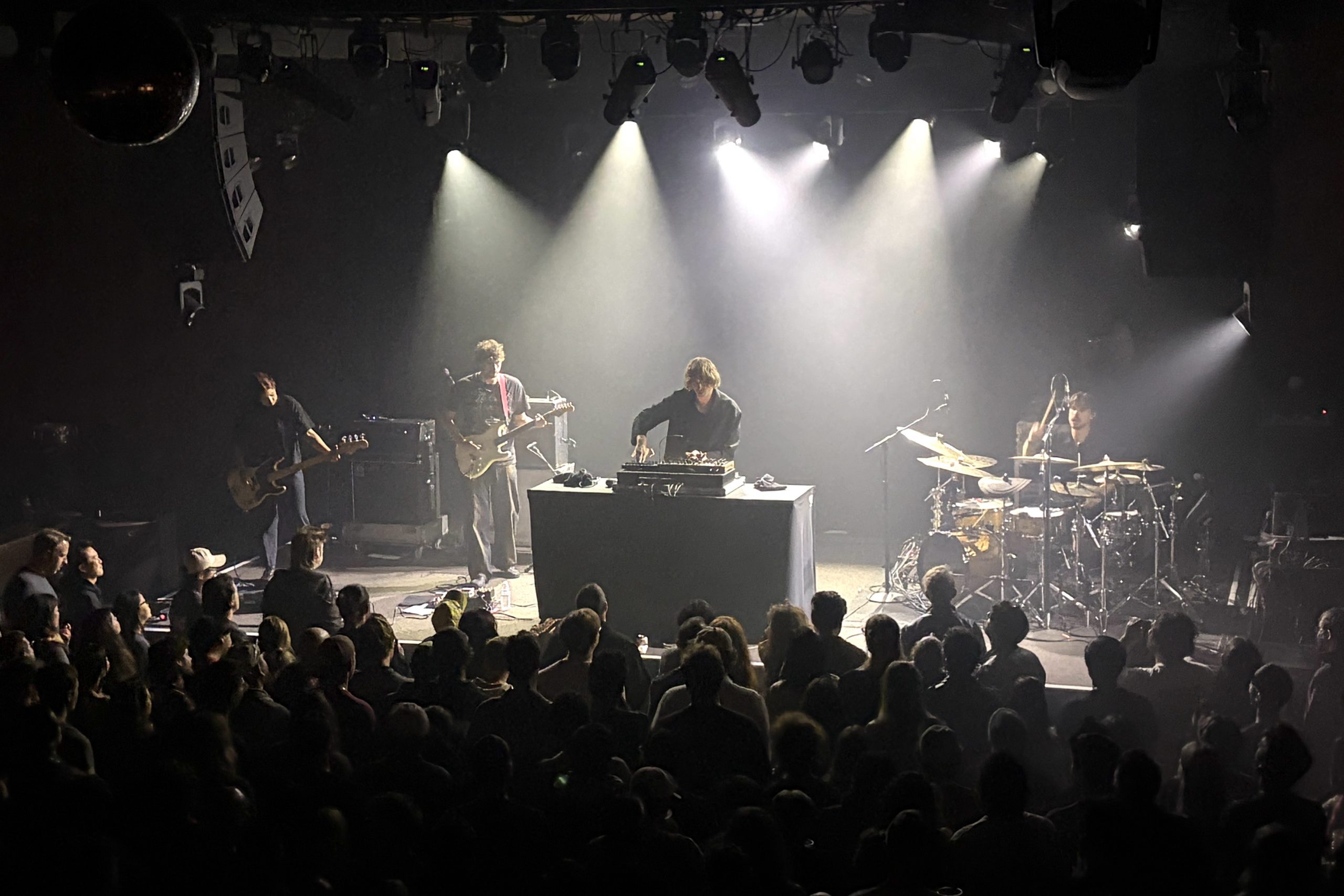
The most used word from my notes on the show was “Wow”. How else can you begin to describe the fluid and ever-changing nature of Avery’s set? Live instruments meshed seamlessly with the electronic creations being brewed from Avery’s decks. It was immediately evident how seriously he took both his music and his performances. In a world of nonchalance, I found this extremely refreshing. Behind the decks, Avery danced along to every beat. During the rock-inspired parts of the show, he dissolved into the band, letting other members shine and taking time to highlight their talent. It felt good to hear works like “Greasy of the Racing Line” rattle my skull in person instead of simply through my AirPods. The choice to include live instruments definitely distinguished the show from other electronica acts I’ve experienced for this reason. The show came to a close with an inspired rehashing of Avery’s breakout hit “Drone Logic.” In a perfect union of both old and new, “Drone Logic” was elevated to new heights with the inclusion of hazy, psychedelic guitar riffs and fuzzy bass lines. I really felt Avery’s transformation as a musician through this rock rendition, and I could not help but relocate myself directly in front of the speaker and dance along. In our interview, I tried to coax out the slightest detail about the show, but Avery smiled and insisted on maintaining the surprise. If you should choose to go, pick the techno dancing heels and let the music take you over.