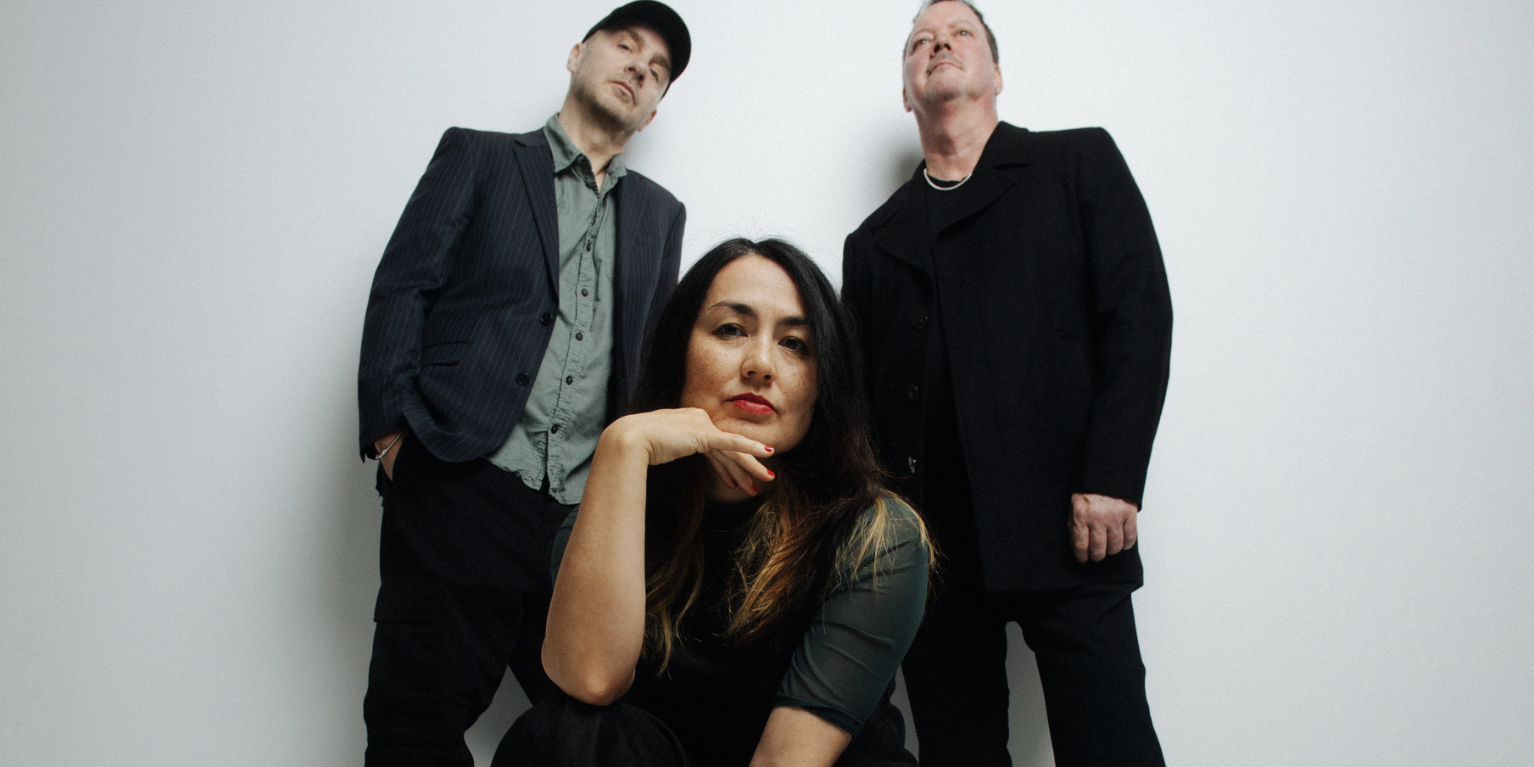
Photos courtesy of Rob Blackman
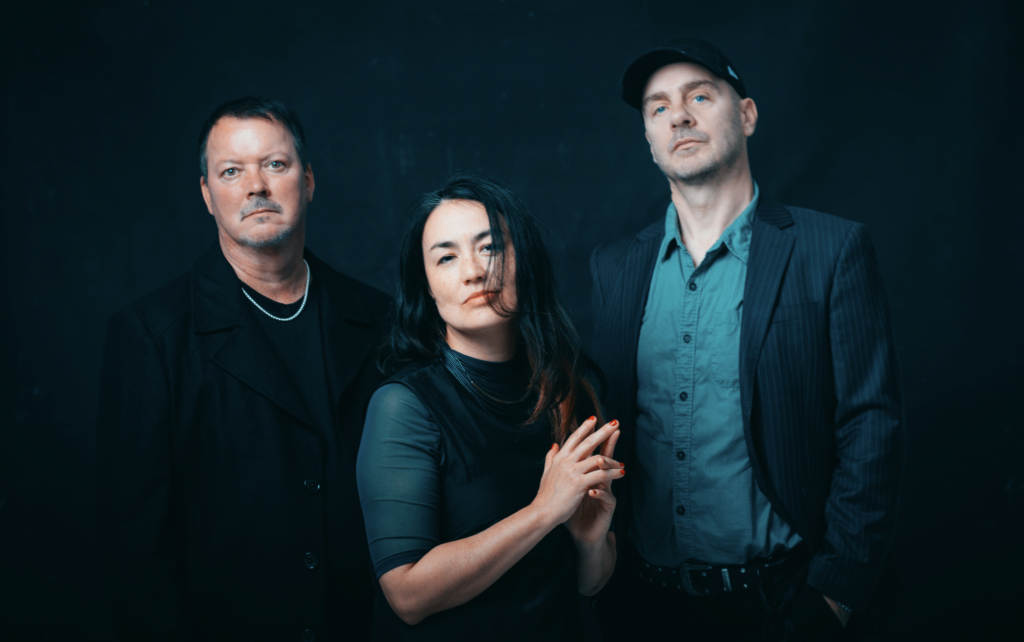
While growing up just outside of London, Jasmine Rodgers fell in love with creating music. As the lead vocalist of the alternative rock band bôa, also composed of Lee Sullivan and Alex Caird, Rodgers has performed across the world, connecting global audiences with heartfelt lyrics and a hypnotic sound. On social media, bôa’s discography has gained major traction, with their single “Duvet” surpassing 1 billion streams to date, making them certified platinum in North America. This summer, bôa is touring across North America, where they will be performing in Los Angeles on June 24 at The Bellwether.
—
This interview has been edited for clarity and brevity.
Amanda Romankiw: Thank you for joining me today. Growing up, what was your relationship with music and the arts?
Jasmine Rodgers: It was very intertwined. I experience emotions with music – they can be a good funnel when I’m feeling like I need to express myself. My father is a musician, and my mum was a poet and a writer. I grew up singing before I could speak.
AR: You mentioned you’re from London. How do you think this experience shaped your creative process and identity as an artist?
JR: I’m actually born and bred just outside of London. It’s where the Thames leaves London, and it’s quite green. All of bôa are quite nature-y people, and one of the things we used to love doing was writing and rehearsing together up until the early hours of the morning, and then we would go for a long walk through the forests and fields at three in the morning. London is also very multicultural, so I got to experience lots of different music as I was growing up.
AR: Who were some of your artistic inspirations growing up, and how do you see them reflected in your current craft?
JR: I used to listen to my dad a lot, and he’s the front man for Free [and] Bad Company. I listened to Led Zeppelin a lot. I listened to Ella Fitzgerald and Duke Ellington, like swing jazz in the early 20s and 30s, but I was also listening to Sandy Denny – folk music. Growing up, you would hear Blondie, Siouxsie and the Banshees, New Order, Depeche Mode, and then others started coming up, like PJ Harvey, Fiona Apple, Patti Smith – more grungy things.
AR: As you listed those genres, it’s truly across the board. I can definitely see a cohesive blend in your sound, and I think it’s so impressive how bôa has such a diverse range. I’m drawn to your music’s use of alternative, nostalgic, and dreamy elements. Could you elaborate on the process behind developing bôa’s sound and artistic direction?
JR: One thing that should be remembered is that it was a band of originally six people, and everybody had a very broad sense of their musical identity already, which meant that we argued over everything. One thing that was wonderful was that when somebody would come in with an idea, we were like, “Let’s try it.” In a weird way, we had a massive range of colors to work from, and the canvas was very forgiving.
AR: Your single “Duvet” has surpassed 1 billion streams to date and is certified platinum in North America. I can only imagine how surreal that must feel as an artist. Did you receive similar praise during the initial release of the song and how did you react to this viral exposure in recent years?
JR: At the time, we had no idea – all we wanted to do was create music that we really believed in, and I can say that for all of the years that it wasn’t viral. When people started picking up on it, we were like, “Yeah, that’s cool.” It was something that we were all proud of and then it started being like, “Oh, I’ve got a text from my mates that they heard ‘Duvet.’” Then it started to go a bit crazy. I think it was really strange, and the virality of it was beautiful because you can see how people are engaging with your music. You can see people creating reels and artistic things from it. Of course, when it first went viral, that’s one thing, but it’s the other stuff after that, where you’re just like, “That’s really nice, because that’s kind of how I see it too.”
AR: It really embodies how great art will forever be carried, brought back, and appreciated across future generations, which is really beautiful.
JR: It is, and it’s also how people interact with our music creatively. We’re just creative beings from the moment we exist. That’s how we connect with each other, so it’s really lovely. I feel very weirded out, but also incredibly grateful [laughs].
AR: You released your latest album, Whiplash, in 2024 but up until then you hadn’t released new music under bôa since 2005. Did you always envision releasing a later project with the band, or did this idea spur as a response to the online resurgence?
JR: We went on a hiatus without really thinking about it. I’d been in the band since I was 15, just about to turn 16. We’d been in it for a long time, and we just wanted to do other things. I ended up doing a degree, and everybody basically had kids or did whatever they did. Before then, it was all-consuming, so I guess we needed that break. There was always this kind of thinking of, “Oh, one day.” Then Alex [Caird], Lee [Sullivan], and I met up and played “Duvet” in my living room. We were jamming around it, and we were like, “Oh, we’ve still got music to write together.”
AR: How did it feel to get back into the studio and create new music with them?
JR: It was kind of different. I’m a growing woman now, and I think I’m much more forthright about my opinions [laughs]. It’s a different world. It was interesting because when we recorded Get There, you had Pro Tools already, but the way you can copy and paste now is so much more advanced than when we first recorded it. Initially, we did it completely analog, so technically it was different, but we did feel like we were in a band, working together. We know exactly the sound that we wanted, regardless of what any producer wants.
AR: With the development of Whiplash, was there a cohesive theme or idea that you wanted to get across that differed from your past albums in terms of creative process and how you wanted it to be received?
JR: I don’t think we thought about that. We can’t think about other people in that way. It would slow us down. The only thing that I did think about was through the years, the number of different messages we’ve received about the songs and what impact they’ve had.
AR: How did you guys come up with the name bôa? Is there meaning behind it?
JR: Many arguments through many lists of ridiculous ideas [laughs]. We like the fact that it could be the feather boa, or it could be the boa snake, or it could be “good” in Portuguese.
AR: This year has been a big moment for the band’s global tour. You just wrapped up in Europe, and then your North America leg is going to take off, followed by China. What does it mean to you to be able to share your art with live audiences around the world?
JR: One of the things about having this opportunity is being able to go and say thank you to the people around the world that have listened to our music and kept us going. It’s my ambition to be able to do that.
AR: I’m looking forward to covering the Los Angeles show at The Bellwether! What’s your favorite part about touring? Do you have any favorite memories?
JR: It’s a really nice atmosphere at our shows, and it’s really nice to meet everyone afterwards. There have been loads of really good things that have happened last year. When we were in Florida, and it was my birthday, everyone was singing “Happy Birthday.” It was a pretty cool moment. Turkey was wicked. They’ve all been great. I’m very lucky because I’m getting to tour with a really good bunch of people who are fun. We went to Latin America, and the first show I had after my mother passed from cancer was Corona Capital, which was quite a wild experience because she was such a supporter of bôa, so it was a big thing. I felt very held by the audience on a very emotional, personal level. I suppose one of the best ones was my guitar floating off on a lake somewhere in the States.
AR: I was looking at the band’s Instagram page and saw a video of various European crowds singing the lyrics of “Duvet” back to you. What I noticed was how many of them were younger fans. How does it feel knowing your music is carrying a timeless cadence that deeply resonates with younger generations, like myself?
JR: Well, it just goes to show that taste is timeless [both laugh]. Sorry, that was a bit wonky. It’s really nice. We weren’t aiming at anybody particularly, just aiming to be true to ourselves. I think the authenticity of our music is hitting the authentic part of these people, and I really enjoy that they get it.
AR: Most of our audience at UCLA Radio are college students. What message do you have to young creatives trying to navigate the industry?
JR: If you want to go for the long haul, then stay true to your north because that’s important, and you’ll never regret it. You know when it’s good, and you’re less likely to get lost in it all. Having said that, there’s always room for learning. Sure as hell we’re learning as we’re going, so try to remember to have fun.
Listen to Whiplash by bôa below and see them live in Los Angeles on June 24!