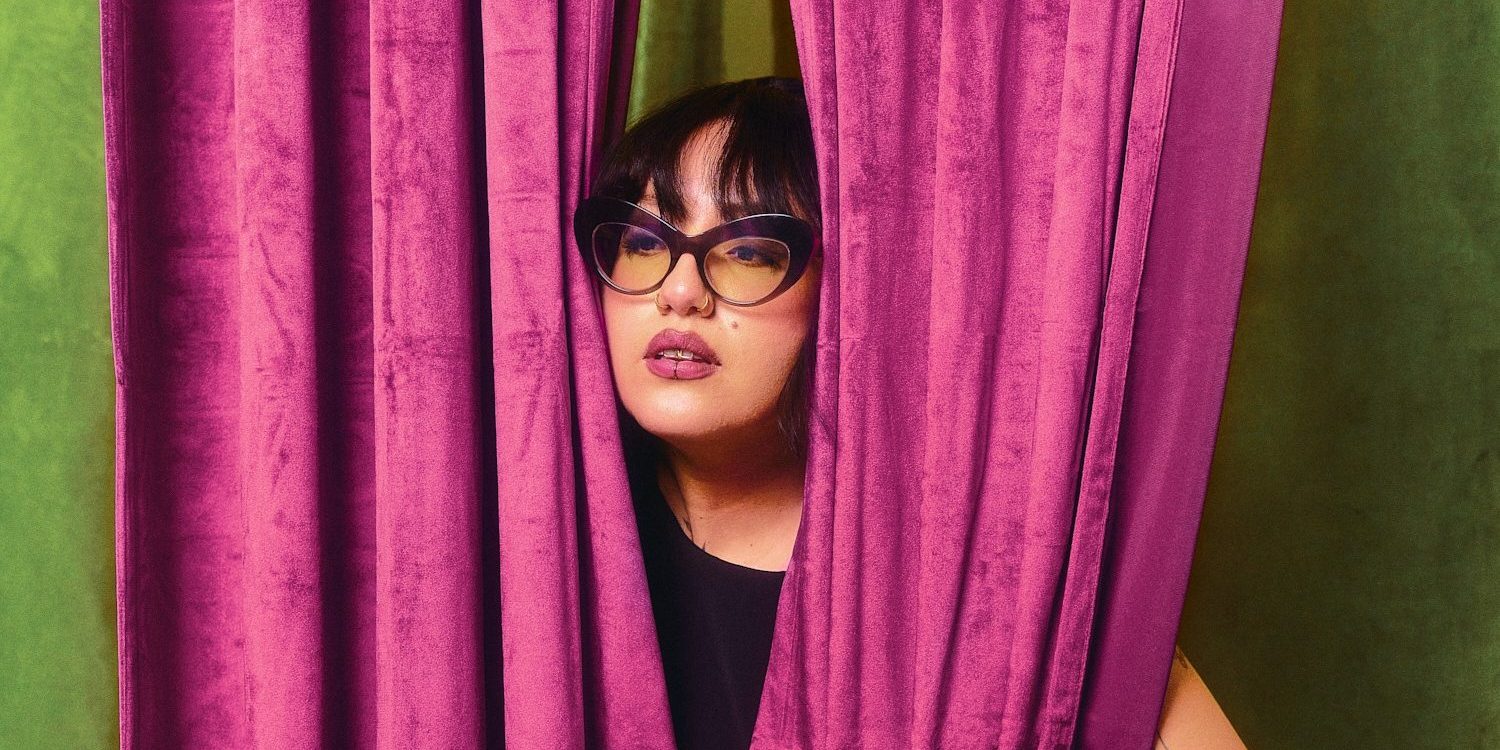
Ariella Granados, known by the pseudonym Sparklmami, is a Mexican multidisciplinary artist and musician born and raised in Texas and based in Chicago. Sparklmami’s artistic endeavors and life adventures harmoniously come together in their debut album, in this body, coming out June 5th. This project is an intimate look at Sparklmami’s self-understanding, relationships, and internal dialogue with a beautiful album cover featuring personal items and memories that reflect the greater family-focused themes present throughout her work. I was lucky to talk to Sparklmami about her upcoming release. With such a funny and relaxed essence, it’s evident Sparklmami’s art emanates from a deep place within her that we’re fortunate enough to get a sneak peek into with works like these.
—
This interview has been edited for clarity and brevity.
Ava Bozic: Thanks so much for joining me. To start, I’d love to hear about your early interests in music and art. Did you grow up in a creative family? Where did it all start for you?
Sparklmami: My mom was always a creative person, doing things around the house and always working on her own personal projects. She used to collect music and CDs, so she’s definitely my main point of inspiration. She might not have been an artist in her profession, but it’s in her spirit.
Also, growing up in a church was my formal introduction to music and singing. I used to be in this church band with my cousins — it was funny. [Both laugh] I did that from 10 to 15, and we would travel on the weekends with my youth pastor, playing at different churches in Texas. That was a very formative time.
AB: I know you have a Latina background, grew up in Texas, and now you’re in Chicago. Do you find that these places all come together and influence your sound?
S: 1000%, absolutely. A lot of my childhood was spent in Texas, and I would spend summers in Chicago. I was exposed to Chicago house music, and I remember going through my mom’s CD binders and listening to all of the CDs that she had been collecting.
AB: Love that. Your debut album is coming out soon. First of all, I’m extremely excited because one of my top songs last year was “running.” Anyway, I noticed that you are releasing your debut album on CD and vinyl, not just digitally. Why was that analog aspect important to you?
S: Because I think that’s the way music should be listened to.
AB: I agree.
S: A lot of the process in making this album was thinking about what it would sound like on vinyl. The album was recorded to tape and processed through analog methods. When I started the album, I was like I can’t wait to hold the vinyl.
AB: Absolutely. I also think that is the proper way to experience an album — to listen front-to-back. It’s somewhat of a lost art, but I think it’s coming back.
S: I agree.
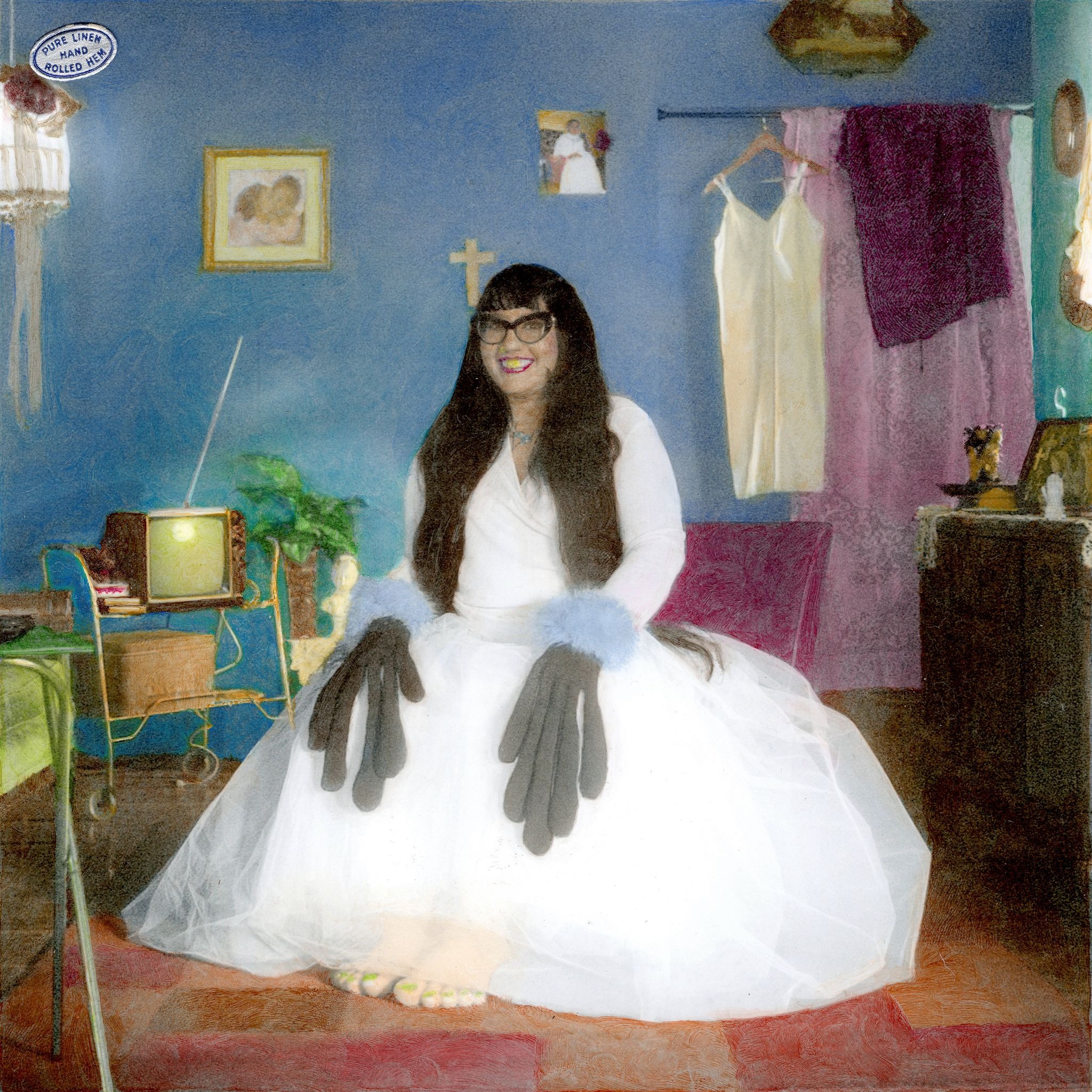
AB: I’m really curious about your inspirations for the album art. My first reaction was almost Van Gogh-esque, with the bedroom scenery. There are also repeating visual motifs of gloves and vintage styling. What inspired it?
S: I was inspired by a lot of things, especially trying to understand what “home” means to me. I don’t think I had the most conventional experience of home; I moved when I was 17 and started living on my own. I wanted to pay tribute to and honor my family, and I was inspired by a lot of old archival family photographs, specifically from the early 1900s. They had very stoic poses and were never smiling, which I thought was interesting. Posing in that kind of way felt important, but also juxtaposing it with me smiling.
It was also inspired by glimpses of what I remember of my family’s houses in Mexico as a kid. Most of my family, once they immigrated to the U.S., didn’t really go back to Mexico. I didn’t have the experience of regularly visiting, especially because my family’s from a border town. I think I was romanticizing the aesthetic of that kind of home.
AB: I can see that. It feels like a very personal album cover — the more you look, the more you can discover. There’s a lot to break down.
S: I also worked on a ceramics project where I got to recreate my childhood home. It was another iteration of reimagining what home looks like or means to me.
AB: Totally. Speaking of reimagining, I know you have experience DJing. I’ve seen your set for summer school radio and the intro-type song you did with them, “summer school radio with Lovie.”
Has DJing inspired or played a part in your music-making?
S: Yes. When I left the church, I stopped singing for 10 years, so I didn’t actually start making music again until 2021. I like to think that in those 10 years, I was researching and really figuring out what it is that I liked. At first, I was just collecting music and going down YouTube rabbit holes — mostly just digital. Then I started collecting CDs, and over the pandemic, I learned how to DJ. The research is also a very important part of the process. I have reference points that’ll generate ideas as to how I want to combine things, or even the feeling that a song will give me.
AB: It also makes sense as an artist to consume as much as you can and want to understand what it is that you like and want to create.
In what will be the opening track of your first record, “no te vayas,” you open with talking, setting the tone for a radio-style welcome. That also reminded me of DJs in the 90s talking on their records. I’m curious if that is intentional and why you chose to start that song in that way?
S: Honestly, I was just speaking off the cuff. I feel a lot of the process of talking on the album is just from my subconscious. I am placing myself in this imaginative space or embodying this character that’s welcoming you to the radio, but also welcoming you to my world.
AB: I really like that part of your music and art in general; it feels very transcendent in that you consume it, but you’re not listening passively. It’s very welcome to this whole space and this character.
It’s interesting that you also have experience in visual and performance art as well. How does that world-building all come together to make a sound? Or do you feel that’s the only way you can approach art as a whole array of things and not just music?
S: Before making this album, I was very much focusing on specific mediums and projects. Before music, I was mostly just doing visual work: green screen work, character alter ego-based work. I would recreate minisodes dramas inspired by Mexican television and soap operas. I would do my makeup, collect wigs, and just be in my studio talking to a camera. It was my way of processing and understanding my own lived experience. Then, I did some community organizing work where I got to bring the community into my practice, and so it was the same thing: alter egos and exploring ideas of utopia, what that meant, and what that looked like. That evolved into me taking on the ceramics project. Towards that last project, I started making music, and I think all of that had to happen the way that it did. Even during those 10 years where I wasn’t singing, I was researching and figuring out what I like sonically to lead up to this current moment. Now, making music, the song will come to me, and I will just start to see what the world feels like or what it looks like. It’s a very intuitive process.
AB: Having collaborated with people like Mndsgn, Eddie Burns, and Les Sons Du Cosmos, does a part of the fulfillment of making music and art for you come from bringing community into it?
S: 1000%. It’s a lot more meaningful. It is kind of my ethos, sharing space and community with like-minded people or people who can add to my vision in ways where I’m not the most proficient. That’s also the fabric of Chicago, and that was my introduction to music. I built community by just showing up to an open mic and meeting friends. I just wanted to make music, so I was around to watch, learn, and see.
Before making my own music, I was also a makeup artist for different artists in the city, or a creative director for my other artist friends who had projects. It was just very natural.
AB: I’m also always curious about choosing an artistic path as a career. A lot of readers are in college, and I have a lot of friends who are really drawn to working in creative spaces. It’s a very daunting decision to make. What drove you to feel like music, creation, and art were what you wanted to do with your life? Do you have any advice for people who also want to take that path?
S: I got my BFA in college. I’ve always been super creative. I remember feeling the pressure of my family, but I was like, there’s just no other way, and I’m just going to figure it out, you know? What helped me was having the space in college to feel fully free and experiment. That’s so important.
AB: It makes sense. I feel like a lot of people I talk to, it’s not really something where they’re like I chose this. It feels like this is just what I’m supposed to do
S: It’s just natural! I didn’t really know what I was doing. I did a bunch of things. I knew what I wanted to do in that moment, but I didn’t really know. There were moments when I felt overwhelmed. I was still working a day job and hustling, but I was committed. Like something has to give!
AB: I love that. A result of that is that you build this life of creative people around you who inadvertently encourage you to keep going because you’re seeing them do exactly what they want to do. Being surrounded by people who love what they do is the most inspiring part of it. It just keeps expanding and expanding until you’re already doing what you want.
S: When I was younger, I used to feel really insecure about the fact that I didn’t have just one thing that I was focused on. But I learned early on that 1) it actually will work to your advantage in the long run, and 2) being an artist, there are no rules. Someone did it this way, but that doesn’t apply to everybody.
AB: Yeah, entirely. There’s such a structure that we’re supposed to follow. Even in the music, there are certain goals you’re supposed to hit, and that feels exactly the opposite of what creation is meant to be.
Did you start this album with some sort of conceptual idea in mind or just let the music take you where it needed to go?
S: I definitely had a concept. I knew I wanted it to be about something in relation to my body, not even that literal, but more conceptual. It’s my own lived experience expressed through these songs. A lot of this was just figuring it out along the way too. I was initially pretty insecure about these songs because they didn’t sound like anything I’d ever heard in terms of the song structure, but I knew what the references were.
AB: Listening to some of the songs and reading the lyrics, the way I interpret it is, sonically, it can feel more introspective than just a surface-level reading of the lyrics. It feels like the actual musical piece is such an important element to you. I can hear inspirations reminiscent of classic jazz or bossa nova or women in the 70s who have a certain vocal sound that I’m obsessed with.
I hear all that in your music, but in a way that’s entirely new and refreshed. I’m really a fan, gotta be honest.
S: Thank you! [Both laugh]
AB: I noticed a couple of your songs start off with more of a melodic singing before the drums come in. I don’t know if that’s an intentional signature of yours, but it almost reminds me of the way Pharrell has the four, bump, bump, bump, bump at the start of his songs.
Specifically “fajas” and “running,” I feel like I know I’m listening to your songs. Like the beginning has a very clear *I tried singing her beautiful intros* and I’m like oop! I know what’s going on! [Both laugh].
Before the drums come in it’s already caught my attention. Is that something intentional or just kind of what flows?
S: No, I don’t think it was intentional. At the time, I just had a melody, but I didn’t know what to put there. Then it kind of just worked.
AB: It does work. I’m excited to hear it all together in an album because I feel like the transitions are going to be so cool between each song.
S: I thought about that too!
I’m curious to know what you think after you listen to it.
AB: Oh my god, it’s probably going to be one of my most played albums of the year for sure!
I also love that you post playlists of music that you love… I saw you’re a Cleo Sol fan?
S: Oh, 100%
AB: I actually got to see her live last year, which was insane!
S: Me too!
AB: Where’d you go?
S: To New York. She was the first artist I ever traveled to see.
AB: Wow, I don’t blame you. I was lucky that she came to LA, and I was like this is an insane opportunity. I’m obsessed with her. I’m not religious, but I was that day.
S: I mean, she brought me back to God.
AB: She brought me to God for the first time! [Both laugh]
These songs are like your babies. How do you pick what’s going to be a single?
S: It’s just a feeling. I wasn’t thinking about it that hard. I was listening to these songs in my car by myself for years. I remember “running” being done and thinking this song feels like a moment, same with “fajas” and the others.
AB: Even the video direction on those, how involved are you, or are you thinking about the visuals as you’re making the song?
S: No, it’ll usually come to me after.
Once it’s done, then I’ll start to see things.
AB: Is there anything in particular you hope that listeners take away when they listen to your album? What do you want people to get from it?
S: I hope I can make people feel something. I’ve been thinking a lot about freeing myself from wanting to feel understood by people and finding peace in knowing that I can make people feel something. I think that’s more than enough.
AB: Absolutely, and I’m sure people will!
The name Sparklmami, is there a specific story behind it?
S: I was in art school, and I used to throw shows at my friend’s house when I was in college. At that time, in 2016, everyone was just introducing themselves by their Instagram handles. Then I was like, well, I guess I’m Sparklmami.
AB: Do you feel that it gives you an alter ego in a sense?
S: Now, for sure. Literally last night I was like Sparklmami this, Sparklmami that…What about Ari? [Both laugh]
AB: I know, who’s gonna ask about Ari, man? It’s just gonna be about Sparklmami.
S: But it is nice to have that separation now.
AB: Does that alter ego give you more of that freedom?
S: Yeah, absolutely, and I think the alter ego is still informed by me.
AB: Well, I hope that you go on a tour…
S: I’ll let you know because…it’s coming.
AB: Perfect. I’ll be waiting. I’ll be reloading the Instagram, thank you so much.
—
Sparklmami will, in fact, be performing live at Jazz Is Dead LA at the Moroccan Lounge on July 22nd!
Listen to Sparklmami’s latest single, “quisiera,” here:
Listen to Sparklmami’s discography here: