
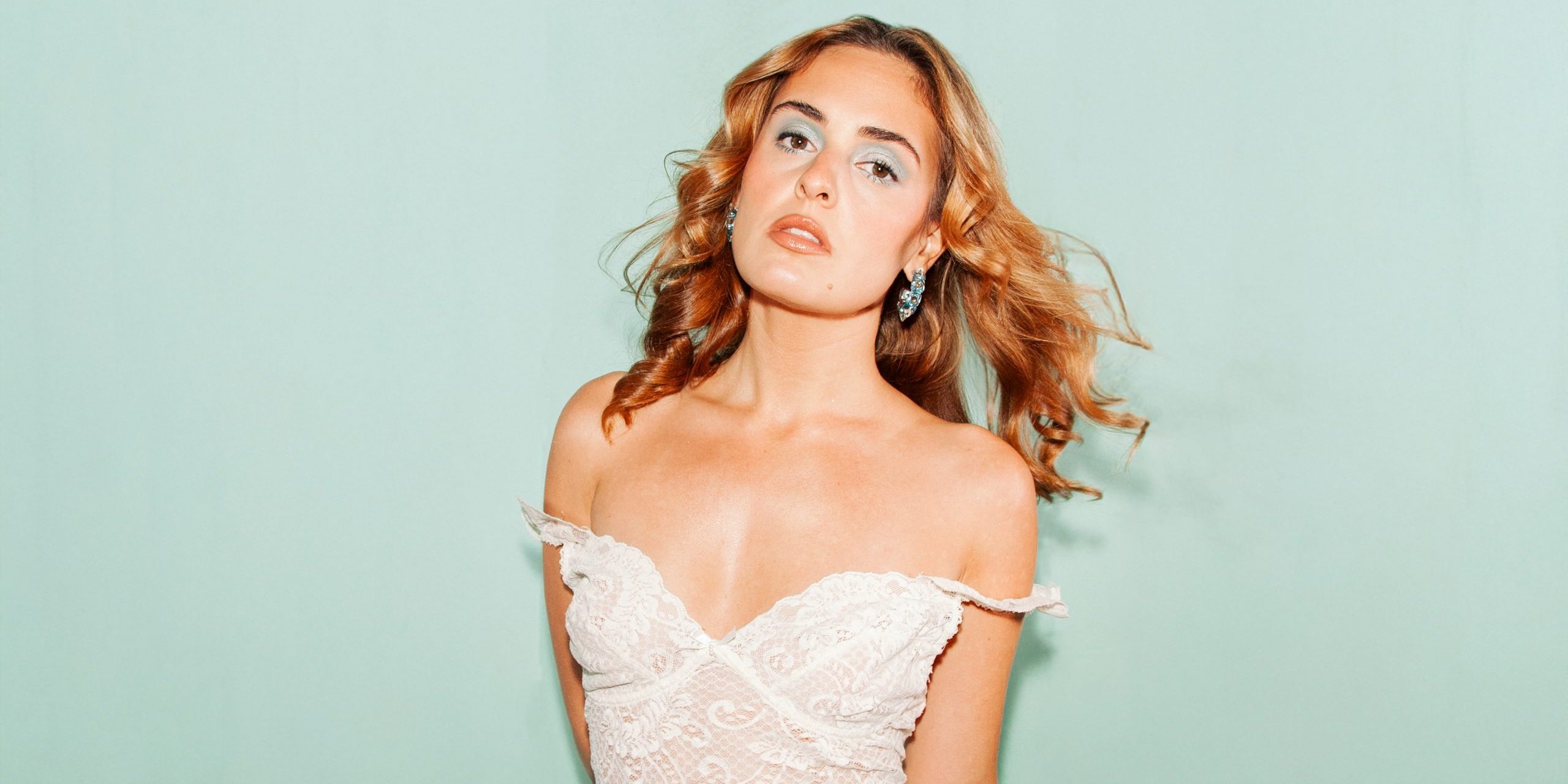
Photos courtesy of Sonderview
Fans deep in the world of pop music tend to get a few years of claiming an artist as their little secret before the rest of the world catches on. Discovering the magic of pop singer-songwriter Avery Cochrane has felt like catching the last train before she inevitably soars to stardom. There’s a timelessness to her music that allows it to seamlessly move between the past, present, and future, making such a difficult task seem effortless. Cochrane can cohesively capture the spirit of the ’60s and the gay clubs of today all at once thanks to her impeccable pen. When she sings, “Don’t look at me astonished / You asked me to be honest,” the thesis of her existential pop becomes loud and clear. On every beautifully written bop, Cochrane pours her heart out and encourages you to dance to the sound of it.
I had the opportunity to chat with Cochrane following the release of her latest EP, Male Validation and Other Drugs, to discuss writing political pop, dealing with the double-edged sword of social media, and satirizing the absurdity of the digital age.
This interview has been edited for clarity and brevity.
Kiara Mack: I thought we’d start with some icebreakers. What song is on repeat for you right now?
Avery Cochrane: Well, “drop dead” by Olivia Rodrigo. Love it, of course. I’ve been listening to “One of These Nights” by the Eagles obsessively. I’ve been listening to a lot of Eagles, and “Livin’ Thing” by Electric Light Orchestra. I’ve been really into Electric Light Orchestra these days.
Kiara: What’s your favorite rom-com?
Avery: This should be easier than it is. There’s so many good ones. I’m just thinking of devastating romance movies, not rom-coms. What’s yours?
Kiara: When Harry Met Sally and 10 Things I Hate About You are tied for me.
Avery: Those are so good. Those are classics. Does Clueless count?
Kiara: I just rewatched that. That’s a great answer. What’s a song that you wish you wrote?
Avery: Wait, these are harder than I thought. A song that I wish I wrote always changes, but let’s see what I’ve got on my playlist. Probably, “Good Luck, Babe!” Honestly, that’s what it is right now. It’s so genius.
Kiara: On the topic of “Shapeshifting on a Saturday Night,” what does an ideal Saturday night look like for you right now?
Avery: Right now, probably a really great meal with my best friends and some strong cocktails. And then, honestly, staying in, enjoying the buzz, and just plotting and scheming as girls. My friends and I tried to go out in LA last Saturday night, and it was just such a flop. The going out scene is pretty underwhelming here, so probably staying in, but definitely with vices of some sort.
Kiara: Well, first, I want to talk a bit about your EP release shows since you’re fresh off of that. I imagine it’s quite overwhelming to be headlining and at the same time introducing this new body of work to people live, and kind of gauging what works in the music and the performance in the moment. What was that experience like for you, and what do you feel like you’ve taken away most from those shows?
Avery: That was actually beautiful. It was such a surreal experience. Because I had released the EP so close to the shows, I wasn’t anticipating people to know all the lyrics that soon, but at least the people standing where my eyes could see, they did. That was really special to hear a song that I had released two or three days prior being sung back to me. It just shows that people were actually listening to the project and weren’t just there from the one or two songs they know from TikTok. It was really surreal. Honestly, I almost cried, but I think it’s the Lexapro that prevented me from crying. But it was really emotional, especially in my hometown, Seattle, because that was the biggest room and my family was there. It was nothing short of just beautiful and overwhelming.
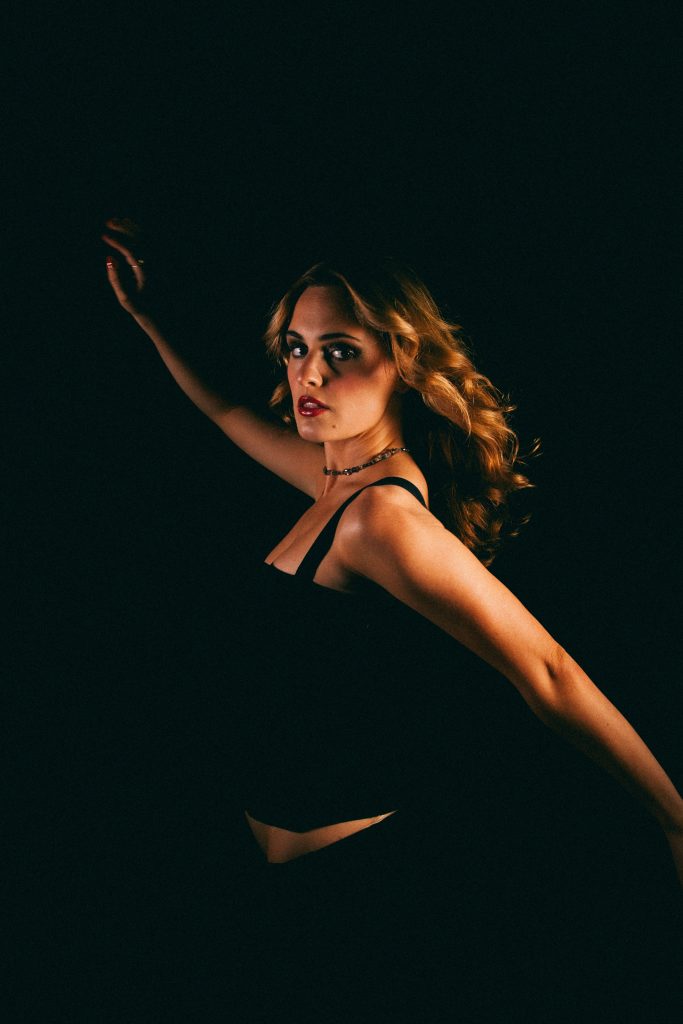
Kiara: I want to go back in time a bit and talk about your musical evolution. You’ve always had such great songwriting, but this EP is a lot poppier than some of your earlier work. Was that a conscious decision, or was it just the natural evolution for you as an artist? I always think about Chappell Roan going through a similar transition and explaining how she just wanted to have fun and not be making and performing sad ballads all the time. I’m curious if you had the same sort of mindset there.
Avery: I did, and I always wanted to make pop music. That was always the goal. I talk about this a lot in sessions because producers will ask me, “Hey, I was listening to some of your older stuff, and it’s really different from what you’re making now. Is there a reason for that?” It was honestly just a lack of resources or lack of knowledge. When I first started making music, it was just me writing these songs by myself in my bedroom and taking them to anyone who could record them for me. Not to call it rudimentary production because it wasn’t, there was still so much effort and money and time that went into the production of my older songs, but in Seattle, I think people are just making less pop music up there. I didn’t really know where to find pop producers, but “Shapeshifting on a Saturday Night” was kind of the song that bridged that gap for me. I posted it and recorded it more acoustic as I knew how to write songs. Then it got some viral attention on TikTok, and then it got attention from a label that signed it to be a pop song, and then I got introduced to the pop production world down here in LA. I loved it so much that I decided to move to LA and have been making pop music ever since. I’m like, “Oh, I was just not working with pop-oriented producers this whole time.” It was always the goal to make pop music, but I’m glad I have this singer-songwriter foundation, wrote so many songs by myself, and can play guitar and piano.
Kiara: I know you graduated college with a degree in political science, so when did you start to consider pop music as a career? You’ve found a really cool way to integrate politics into your music, which I also want to talk about, but I’m wondering when being a musician was something you started seriously considering.
Avery: I’m trying to think how to go back in time and explain this because it gets confusing with the pandemic. The pandemic was my freshman year of college, so I ended up withdrawing from San Diego State and just staying at home in Seattle until my junior year. I didn’t end up going to San Diego State in person until junior year. I was an undecided major at the time that I withdrew. “Withdrew,” “dropped out,” whatever you want to call it. “Withdrew” is a nicer way to put the fact that I dropped out. This was before I even released any music. Then, in the pandemic, I was at home doing online classes at a local Seattle community college, and I started writing songs and took some songwriting classes. Even though I had been writing songs my whole life, this was more in a school setting, and it was fun to do assignment-based work. I wrote one for my songwriting final and decided to release it. It was called “Chelsea Boots.” I released that song in March of 2021 when I was still living at home and dropped out of school. I just started falling in love with releasing songs, creating projects, creating worlds, recording things, and making them sound nice in the studio. Kind of all my money went towards that. I decided to go back to school in 2022. I’m glad I did. I think it was a backup plan of sorts, but I always knew I never wanted a backup plan. When I graduated college in 2024, I went back to my parents’ house and saved up as much money as I could, and made as much music as I could. It was always the goal to have it be full-time, but I wanted to get a degree. I knew getting a degree was important to me, and if I had the means to do so, I should. But music was always, ever since I released my first song, the priority for doing it full-time, and I can finally do it full-time now, since August of last year.
Kiara: That’s so great to hear. I want to talk more about politics in pop because I think politically conscious pop has had a bit of a bad rep in recent years. There’s this idea that I don’t agree with, that that’s not pop music’s job, and pop music can’t be political because that would be contradictory or something. There are fans and listeners who think that, and there are also artists who are like, “Yeah, that’s not my job. These political issues don’t need to affect my art. I’m just here to entertain.” But especially in this EP and some of the songs that you released last year, you’ve really leaned into the idea that art is political, which for me is such a breath of fresh air because it’s very honest in the way that I adore pop for being. How have you been navigating writing about politics while also making it feel authentic and appropriate for the music?
Avery: It’s an interesting line to toe because I do think everything is political. I don’t think you will have correctly studied political science if you don’t start seeing everything as political. My eyes were opened in so many different ways. I feel like I used to be an otherwise pretty ignorant person, definitely not bigoted or anything, but just ignorant to world issues and history or class consciousness. I was lucky enough to have the wool over my eyes. Studying that stuff in the summer of 2020, with the pandemic at an all-time high, with police brutality, lynchings, seeing the country so divided on such indivisible issues that are just purely human rights-based and public health-based, issues that shouldn’t be debated, I was like, “Okay, I need to make sense of this.” I’m so glad I studied political science, but it is a double-edged sword because now I see everything as political. It’s hard not to be super cynical and jaded. It’s hard not to be kind of pessimistic about things. It subconsciously weaves its way into my songwriting a little bit because I like to make these macroscopic issues and my smaller, interpersonal issues kind of connected in some way, but not in a way that’s super preachy. I don’t want to be super overt in it, but I do like throwing little one-liners in there like “All my pain is patriarchal.” This whole project is about my experience under the male gaze and how that has affected my interpersonal relationships and my relationship with myself, but on a broader scale, I’m analyzing how the patriarchy at large causes women and people, in general, to act towards each other, to act towards themselves.
Kiara: And I’m just throwing this out there, but I have to ask if you’re inspired by Bo Burnham in any way because some of the songs on this EP, I feel, would fit right in on Inside.
Avery: Yes, I listened to a lot of Bo Burnham during the pandemic as well as Conor Oberst. I did really like their writing in the political sense, but it is tough. A lot of pop music isn’t political. Again, not that my music is super overtly political, like Bo Burnham’s, but I don’t know. I don’t want to be controversial because I obviously want the best for the success of the music, but also I’m glad that it’s appreciated at the same time.
Kiara: I get it. In terms of sonics, this EP has a sort of retro-futurist, sci-fi vibe that’s very fitting for the existential topics that you write about. How did you land on leaning into the juxtaposition between these existential lyrics with this upbeat, glittery pop, but still kind of ominous production for this EP? Where did the inspiration for that come from?
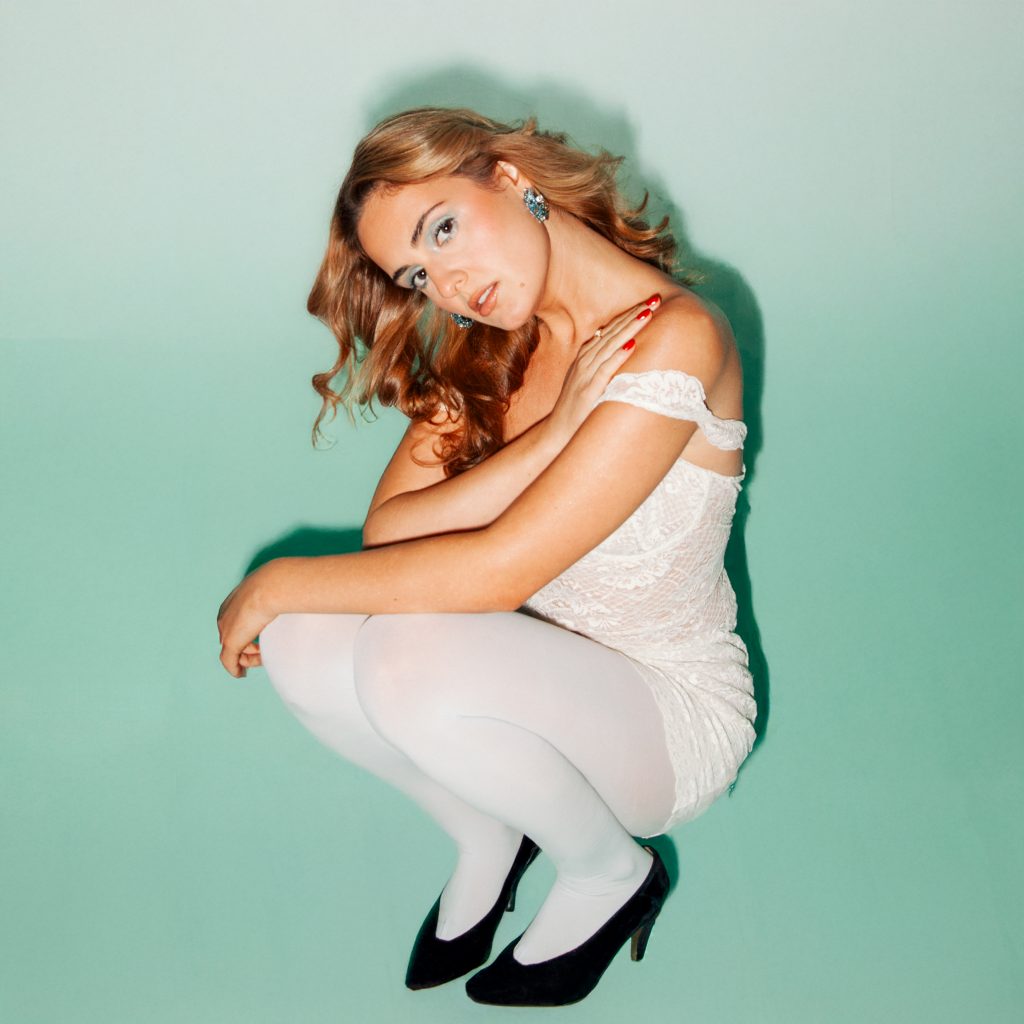
Avery: I was just wanting to make fun songs, wanting to make music that people could dance to, making music that served as escapism, in some sort of way, from these darker topics, because I do love that juxtaposition. Honestly, I think writing a happy song is one of the hardest things for a songwriter to take on. I’m trying to write happy songs now, and it’s pretty difficult. I write about the things I want to write about, thematically and lyrically, and I could put that to a slower, sadder track, but when I’m collaborating with producers on these really fun, upbeat tracks, I just want to apply these lyrics that I’ve already written to the tracks. I can’t really think to write about anything else. Everything is that deep to me, so even if it’s like a club banger, it is that deep.
Kiara: I’ve had “Loneliness in Numbers” really stuck in my head lately because I love the satirical sci-fi balance that you’ve struck with that song. I was listening to it earlier and there’s a very Truman Show vibe to it that I just really love. Where did the idea to write about plastic surgery specifically come from, and how did that bloom into the theatrically existential sarcasm that the rest of the song exhibits so wonderfully?
Avery: I wrote that lyric, “pumped with the plastic,” before I moved to LA, so in June or July of last year. It was after a TikTok binge and seeing on your feed the most beautiful person that you’ve ever seen, with no knowledge of what work they have or haven’t done. You’re seeing the most beautiful, unobtainable-looking person with the perfect face and body, then you’re seeing news about the genocide, then you’re seeing product placement for some skincare brand, then you’re seeing a day in the life. I think a lot of our generation and other generations, but mostly Gen Z, are so fatigued by everything we’re seeing online because it’s just information overload. I don’t think we’re programmed to see this much and know this much about what’s going on in other people’s lives. Algorithms are hard because my algorithm is showing me a lot of bad news, and it’s good to be aware, but when it’s juxtaposed with these people and things that are simultaneously so out of touch, for me, it caused a crisis. After seeing this one influencer who was so perfect, you open the camera and look at your own face, and you’re like, “Damn. I’m no match.” You contemplate, “Okay, well, what does she have that I don’t? She’s got clear under-eyes or a nice nose.” Then, I’m like, “Would I ever get a nose job?” and then I’m like, “Well, does it even really matter at the end of the day? We’re all gonna die.” This is just how my brain is, so that inspired that chorus because it was just a big spiral. That’s what inspired the chorus of “Loneliness in Numbers,” and it turned into a song about social media because that’s what I was up to when I wrote that chorus. I remember writing the first verse when I was at the mall, because I was so stoked for this Alo workout set that I just bought, and then I’m like, “What’s it all for?” I don’t know. It’s crazy. I know no peace is the short answer.
Kiara: Back to songwriting, is there any word, concept, or phrase that you’re trying to someday fit into one of your songs? I’m really curious to know your answer to this, because your music is very wordy in the best way, and you’re great at making every little word find its place. Is there anything that’s been floating around your head lately that you’re determined to circle back around to someday?
Avery: I have a whole document of these. Let’s see what the recent one is. There’s so many. A lot of these maybe aren’t PG for Radio. I’ve been thinking a lot about AI and our relationship to AI. In an interview I did a few weeks ago, when somebody asked me a similar question, I was like, “Well, I’ve got a concept for you, an AI-generated breakup text.” Maybe not even that specific, but just AI in general. My friend received one of those a few weeks ago, and I was like, “Damn, he couldn’t even go through and remove the em dashes or the italics. It’s so clearly written by ChatGPT.” Just the concept of something that should be more personal and heartfelt and driven by human connection, even though it’s delivering bad news. You really couldn’t be bothered to come up with those kinds of words on your own? You had to run it through ChatGPT? That’s insane. I feel like the usage of ChatGPT is so scary and so casual now. I think writing about AI, we’re going to see a lot of from songwriters because it’s becoming omnipresent and more of a threat. A lot of people are enraged by it, as they should be, and I am too. I think it’s something in that vein, something about robots versus humans, tech versus poetry, I guess.
Kiara: That’s such a great idea! You also talk about social media quite a bit in your music. I’m especially fond of “Proud Boy on the web said my music’s shit.” I think about that line all the time. I find following your TikTok really interesting because you often do these sit-down videos where you talk about being an indie artist and marketing yourself in the 2020s and what that looks like. It’s just crazy to me the whiplash that artists must feel these days, with all the ways they’re trying to get their name and their music out there with social media, constantly having opinions hurled at them at all times. How have you been trying to deal with the high highs and low lows that come with being an up-and-coming artist on social media, and why is it important to you that you’re honest and open about that experience?
Avery: Social media is tricky because I owe doing my music full-time to social media. I owe it to my craft. I’m posting on the internet, using those baity, hooky taglines on my videos to reel people in, and using the corny marketing strategies. People have found me; I got signed that way, so I have a weird relationship with social media because it simultaneously does really wreck me on the daily, but also, I owe so much to it. It’s tricky because I’m trying to separate how I’m perceived as a person and how I’m perceived as an artist. There is so much crossover because so much of my music is so personal that it is hard to separate. If there’s a hate comment on my music, I take that so deeply personally. I’m like, “Oh, I knew it. I’m a bad person. I knew I don’t deserve this.” Hate comments, luckily, right now for me, are few and far between, but they do happen, and those are so much louder than the positive comments and really hard to forget about. They do feel very, very personal. I know a lot of other artists feel this way, so that’s something I’m really trying to cope with, especially as things start picking up and the volume of hate is just gonna be bigger. I’m trying not to take it as personally as I could.
Kiara: Yeah. I mean, I see the way that social media treats the women in pop right now, and I cannot imagine being in their position.
Avery: I know. Especially women, too, they’re getting absolutely torn to shreds and scrutinized for things that men do all the time. You know?
Kiara: Definitely. I also want to talk about being a queer artist in pop right now because I think queer artists are making some of the best music and really pushing the genre forward. In the last few years, there’s been a noticeable uptick in the number of queer women in pop who have broken into the mainstream, and artists who are writing songs about women-loving-women relationships are being played on the radio. It’s very inspiring. I’m wondering what you think has drawn people of all backgrounds and demographics to that sort of music and those sorts of stories. What perspective is it that you think maybe sapphic artists are bringing to pop that’s really resonating with people at the moment?
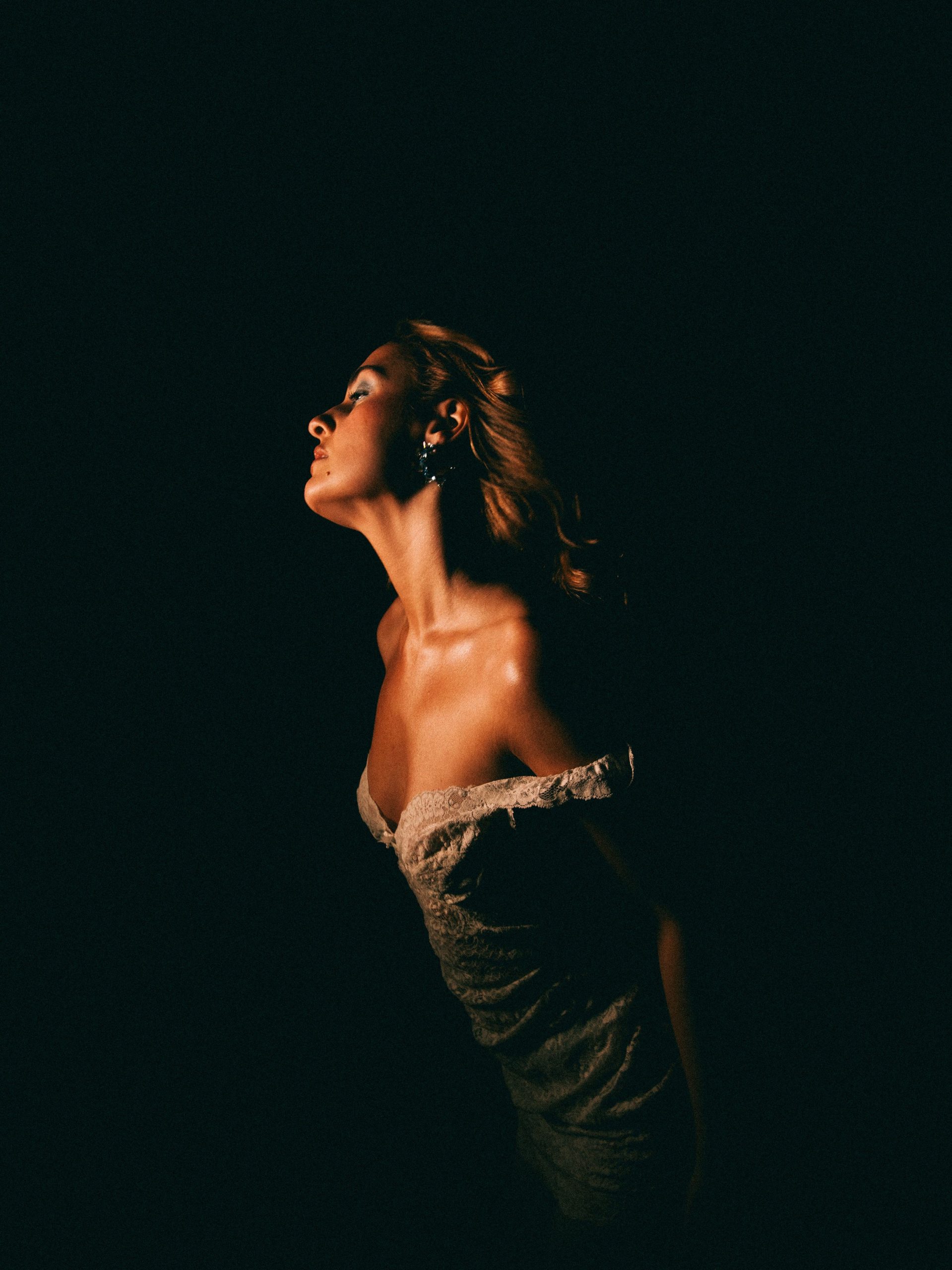
Avery: I completely agree. It’s really cool to hear Chappell’s music or Billie’s music on mainstream radio waves. That’s so cool, especially because they’re being played in these small, conservative towns that have a lot of homophobes. It’s like, take that. I think it’s beautiful. Obviously, queer art has existed as long as art has existed. Maybe it’s not as overt, maybe it’s not as like, “I’m a girl in love with another girl, or I’m a girl sleeping with another girl,” but I feel like people can somehow feel the queer excellence through their favorite songs. Freddie Mercury is one of my favorites, and he was never overtly queer, like using he/him pronouns in his songwriting, but you can tell “Bohemian Rhapsody” is a song about feeling like you don’t belong. A pretty central part of many queer people’s experience is feeling like you don’t belong. It’s struggle, empathy, and community. I feel like the queer perspective really is central to so many art forms. As a queer artist myself, I don’t even think I’ve written a single song with she/her pronouns. Maybe I have now that I think about it, but it’s not common. “Shapeshifting on a Saturday Night” uses she/her pronouns, and I’m referring to myself in that song, but that’s a song about feeling like I don’t belong, feeling like I’m at this really heteronormative university, going to these really heteronormative parties, and feeling out of place. That, to me, is a queer song, even though I’m not writing a love song about another woman.
Kiara: I love the term “queer excellence.”
Avery: Yeah, and Chappell’s a huge inspiration. She’s a good example of making happy, fun, sexy music that is super overtly queer. I would want to challenge myself to write like that someday, too.
Kiara: I really think the sky’s the limit for you. The music is so great, and I know everyone’s going to hear it and everyone’s going to love it.
For my last question, what is on your career bucket list at the moment in terms of venues to play, artists to collaborate with, and any dreams that you’d like to send into the universe before we wrap up?
Avery: Gosh, such a good question. Coachella is heavy on my mind right now because it just happened, and I always told myself, “I’m never going to go to Coachella unless I’m playing it,” which I feel like a lot of people say. I did have FOMO from Coachella this weekend, seeing all the crazy artists that were brought out and that were headlining. It was insane. Coachella would be a dream. Primavera in Spain is also a dream festival for me. My friends studied abroad a few years ago, and they went to this festival. They’re like, “Oh my gosh! It was just the best experience. It was the best weekend.” I’ve always wanted to play the Greek Theatre here in LA because I love an amphitheater, I love an outdoor venue. I’ve seen so many amazing concerts there, and that would be such a milestone. And what else is on my career bucket list? I think a collaboration with one of my top ten artists would be crazy. That would be so surreal. A collab with a main pop girl, a collab with Chappell, that would just send me into orbit. I think it would be really fun to go on one of those pop culture podcasts like Las Culturistas, the Jake Shane podcast, or Owen Thiele’s podcast. I think that would be really fun. But I’m just at a point where I’m saying yes to mostly everything and just hoping something sticks.
Check out Avery Cochrane’s socials and her latest EP, Male Validation and Other Drugs, below!