Photos by Gold Atlas & Sylvia Ansley
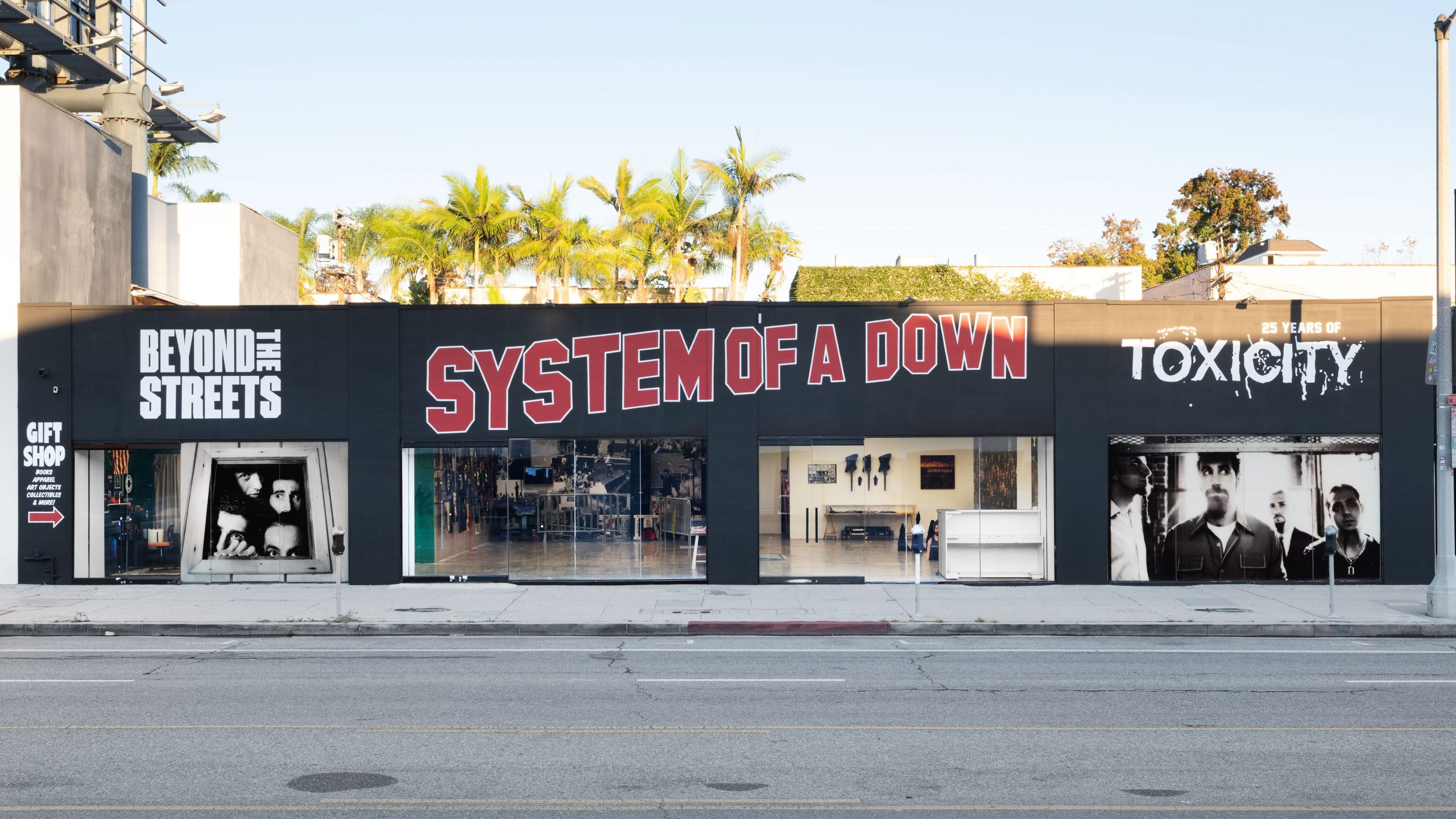
The joke goes that people in LA will stand in line for anything, but as I stood on the sidewalk of La Brea Ave, I waited with purpose. Above me, in large varsity-font letters, read the words SYSTEM OF A DOWN. This year marks the 25th anniversary of LA metal legends System of a Down releasing their groundbreaking album, Toxicity, and to celebrate, the band put together an exhibition to memorialize the event. Partnering up with Beyond the Streets Gallery, the exhibition will run from 10/13 – 10/18. What kind of exhibition you ask? The kind with broken guitars strewn all over the walls, brutalized mannequin heads hanging from the ceiling, and piles of sunflower seeds. Chaotic yet calculated, the exhibition truly felt like an extension of the band. SOAD formed in 1994 in Glendale, California. Blending elements of nu-metal, thrash, and punk, their career has been devoted to the chaotic and anarchist education of the American people, and Toxicity is a great example of this.
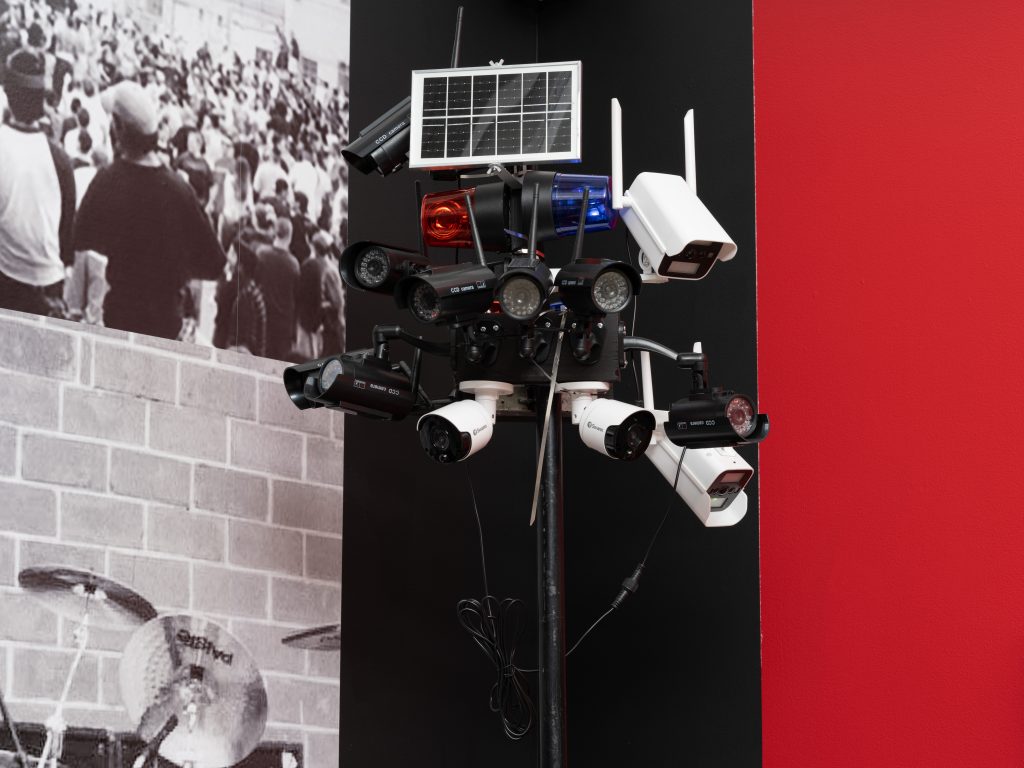
With one of the most exciting opening tracks in music history, Toxicity rips from start to finish. The first track, “Prison Song,” attacks the prison-industrial complex within our country with sonic ferocity. The album, like most of SOAD’s music, explores dark themes and hard truths. Holding nothing back, they scream about drug addiction, political control, and police brutality, with lines like “Minor drug offenders fill your prisons; you don’t even flinch/All our taxes paying for your wars against the new non-rich”. Sonically, it’s an acquired taste for sure; the band goes from guttural screams to operatic vocals to rapid-fire facts about the United States’ crimes against its own people. But their raw, unhindered style of playing and unfiltered leftist ideology (or what I like to call… facts) is what keeps fans coming back for more, even 25 years later.
With other smash hits like “Chop Suey”, “Forest”, and personal favorite “Aerials”, Toxicity was a mainstream success.
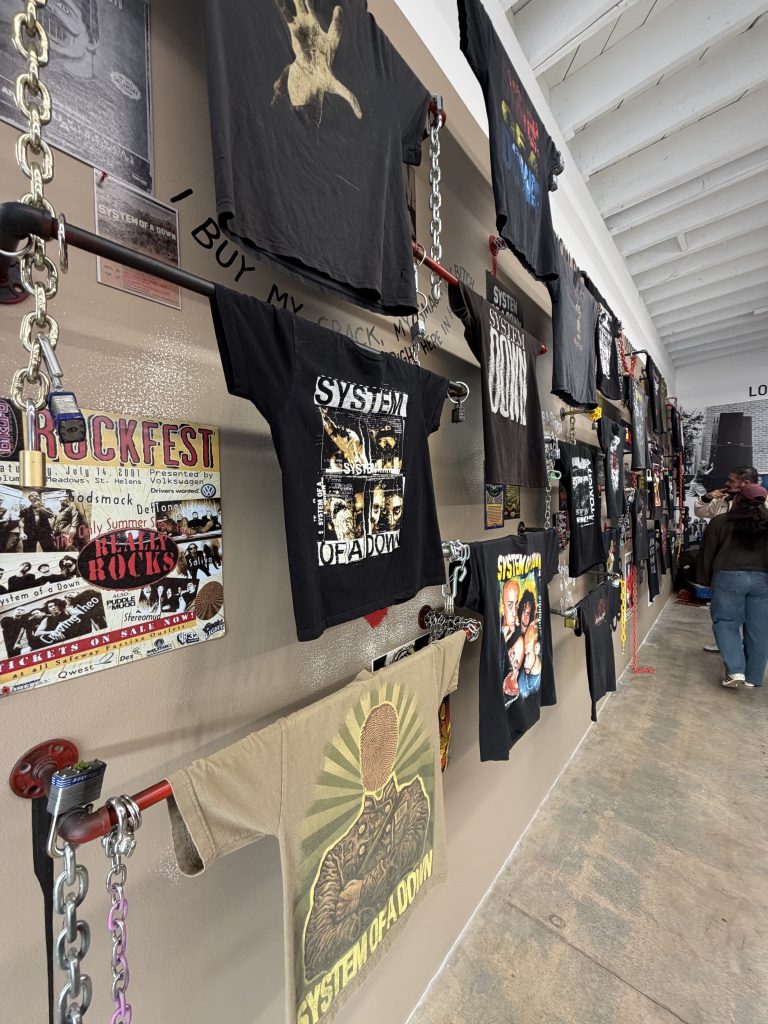
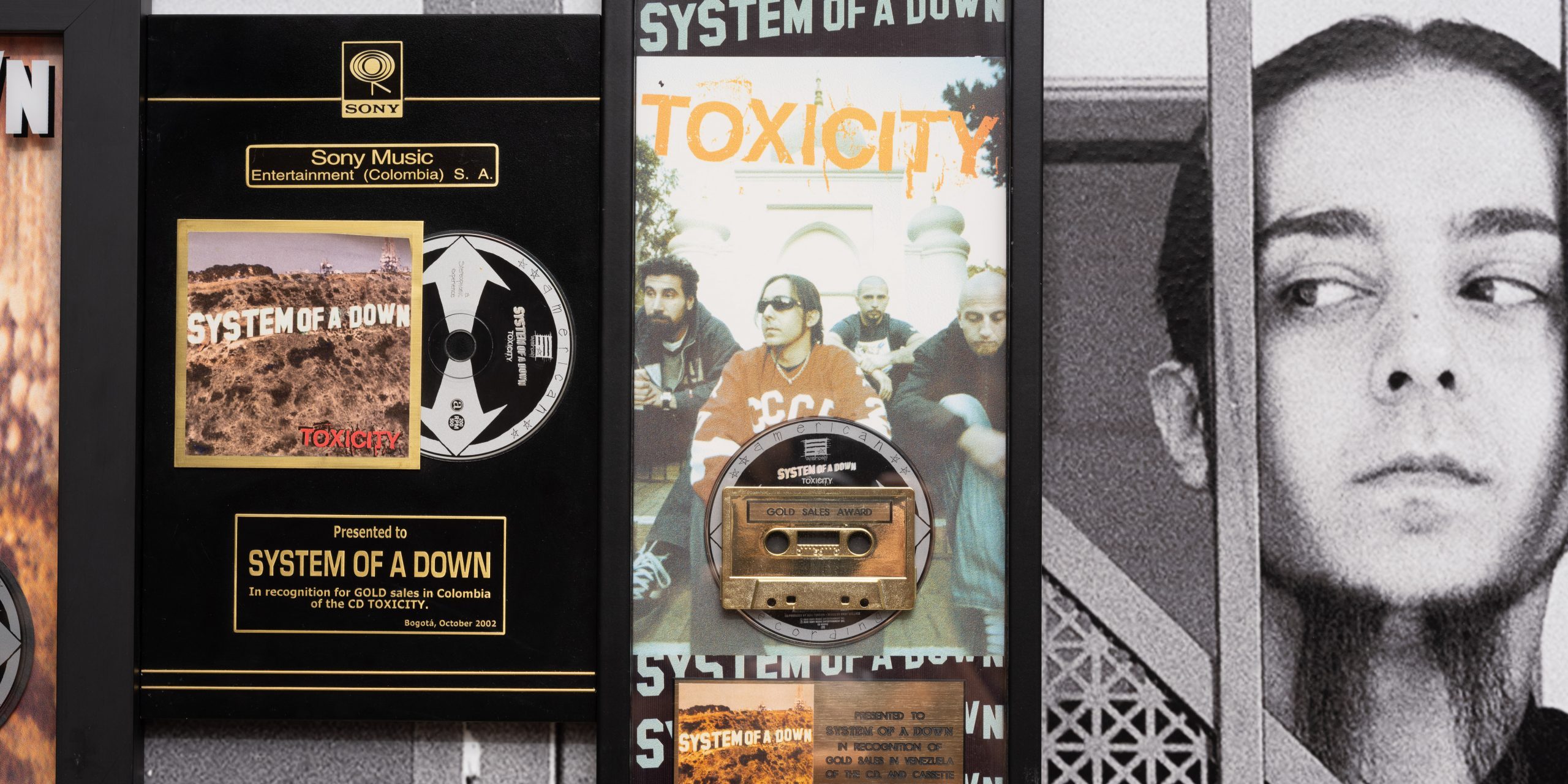
It quickly topped the Billboard 200 and achieved multi-platinum status soon thereafter. Fans of the band will recognize iconic scenes from the music videos of this album throughout the exhibit. A mock living room full of sunflower seeds from the “Toxicity” video, the iconic “You Join” antiwar T-shirt worn by Serj in the “Chop Suey” music video, and even a replica of the iconic Hollywood sign album cover. Those who had been invited to the private opening were squarely within the category of superfans and as much a part of the exhibition as the actual art. I learned way more about the band’s history and significance than I ever would have solo. Almost every single patron had some form of SOAD merch on with varying levels of niche-ness and lore of their own. Many of them had been at the infamous Toxicity release riot that had occurred (against the band’s wishes) on Hollywood Blvd 25 years ago. This exhibit was as much a part of Angeleno history as it was the history of the album. Their songs mention riots, events of police brutality and racism within their beloved city in a way that redirects that pain into productive anger. I spent time pouring over the artifacts featured in the gallery, coveting rare band merch, and laughing at the ridiculous musical antics that SOAD had inflicted upon the American mainstream. Looking over at our current pop culture podium, I can’t help but ask what went wrong. As I gaze upon the golden records hung in their ceremonial cases on the wall, I can hardly imagine a world where such politically outspoken and rebellious music would be so well received by the mainstream.
With the current state of our country, our world, we could all use a little bit more System of a Down in our lives.