Photos courtesy of Richie Valdez
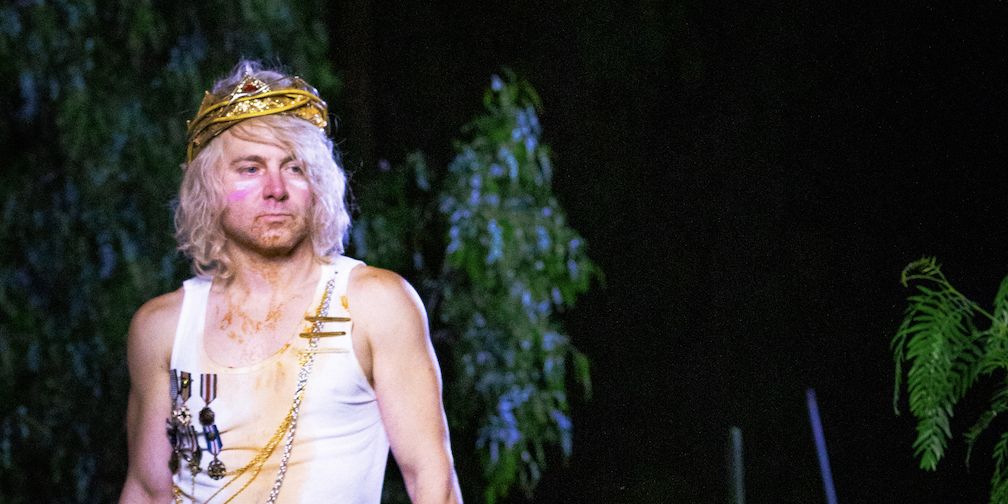
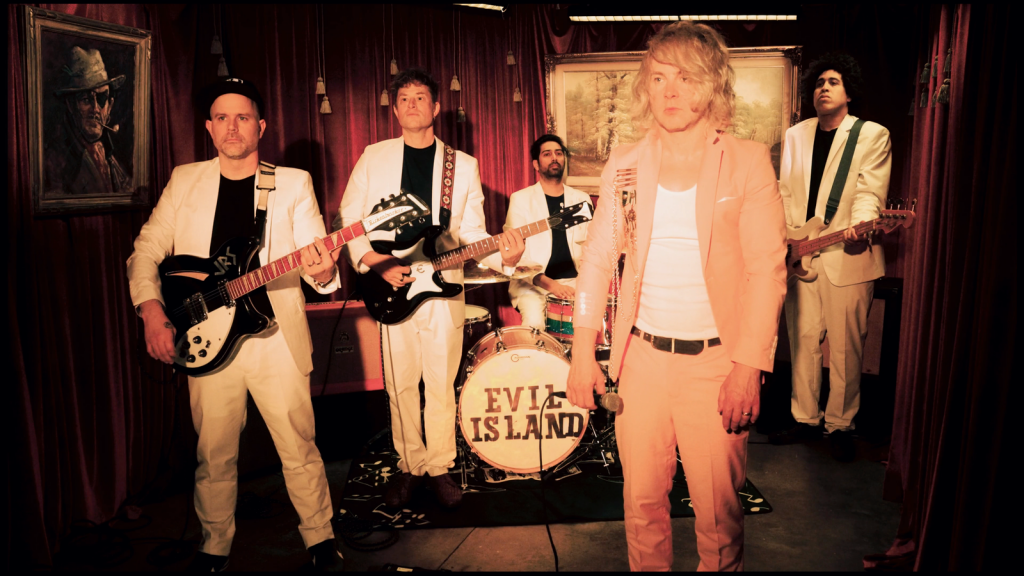
Seattle-born Johnny Whitney is widely known as a lead vocalist of The Blood Brothers. Before their initial disbandment in 2007, the band left a remarkable footprint on the post-hardcore scene of the late ‘90s and 2000s as a result of their eclectic instrumentation and Whitney’s distinct vocal style. That same year, Whitney went on to front his short-lived project Jaguar Love before leaving music altogether to work as a software engineer at Netflix. After a Blood Brothers reunion tour in the fall of 2024, he felt a calling to delve back into his past creative outlet. Now, Whitney is making his thunderous return with Evil Island — a new supergroup composed of fellow Blood Brothers bandmates Cody Votolato and Mark Gajadhar; Autry Fullbright of …And You Will Know Us by the Trail of Dead and OFF!; and Todd Weinstock of Glassjaw. With three singles currently under their belt, Evil Island’s debut album, Terraform the Afterlife, is set to release August 14. I virtually sat down with Whitney to discuss the album’s creative process, selecting artist features, and this next chapter of his musical career.
—
This interview has been edited for clarity and brevity.
Sofia Cardenas: You just released a new single called “Melted Heart” with Alexis Krauss of Sleigh Bells. In an interview with The Needle Drop, you did say that you had never met her before and cold DMed her through Instagram. Why did you decide to choose her specifically for the song and what was the creative process of making the song like?
Johnny Whitney: I’ve always been a fan of Sleigh Bells for a really long time. I remember when they first started — just admiring how well they pulled off the thing that they were doing. We had just been rolling off the end of the Jaguar Love record, which was mostly drum programming-based. We really felt like they did it. I just felt really in awe of how well they were able to pull their sound off.
When we were doing the last Blood Brothers tour, I had noticed that both Sleigh Bells and Alexis were in our likes when we would post about the shows. So, when we were thinking about doing “Melted Heart,” everything up to the point that is Alexis’s part we had come up with before recording. The song was basically the verse and the chorus a bunch of times. When we were doing pre-production, we wrote that whole bridge part. I wanted to do something that felt chanty, almost like a cheerleader chant. It just popped in my head that she would sound really good.
I just out of the blue messaged the Sleigh Bells Instagram and they got back right away. We did it over email, so the process was pretty straightforward — going back and forth with telling her the ideas I had, what the lyrics were, and audio recordings of me doing her parts. She recorded it and we put it on the record… and that was it!
SC: You toured with The Blood Brothers in 2024 for the twentieth anniversary of Crimes, voicing that you wanted to create music again after having a ‘hiatus’ from doing it. After starting Evil Island, what inspiration did you have to make it different from previous projects you’ve been involved in?
JW: Creatively, I approached it a lot differently than any other projects I’ve been in. I took anything other than just being the singer of the band off the table. In other projects I’ve been in, like Jaguar Love, me and Cody wrote everything together. There were some notable Blood Brothers songs I had written like “Laser Life” and “Peacock Skeleton With Crooked Feathers,” but I really wanted to focus on doing singing and nailing it — making it be exactly what I want.
Ross Robinson, who produced [Terraform the Afterlife], waits until he feels the music giving him chills up and down his arms. That’s like the sense memory he waits for — to know that he’s doing something right. So with these songs, the creative process was super different. First of all, because I live in the Bay Area, and Cody lives in LA. We wrote most of the songs by demoing them, emailing them, and then I would try to come up with vocal parts, singing lyrics… We would just kind of go back and forth.
I came off of The Blood Brothers tour not only feeling really energized, but to make music and do more with this feeling that it gave me. I also spent a lot of time preparing for the tour trying to get my voice back in shape, because I hadn’t really done any singing since the previous Blood Brothers reunion tour in 2014. So, I finished the tour feeling not only really inspired, but I kind of felt like I figured out how I’m supposed to sing, and how to be the best version of a singer in The Blood Brothers.
Instead of trying to be all things to all people, I always felt like I wanted to be something more than what I was in The Blood Brothers, if that makes sense. My roots are not in screamy, hardcore music; they’re more in melodic music — ones with traditional song structure. So there was always this dissonance in The Blood Brothers of This is who I am, and This is the reality of what I’m like as a recording artist, and This is where my brain wants to be — I just killed that part of my personality and tried to be the person that I’m gonna be.
When I listen back to the Evil Island record, it sounds the most authentically me-sounding that I’ve ever sounded. I’m not Jeff Buckley, I’m me. I have a thing that I do, it’s like a flavor, whether you like it or not. It’s instantly recognizable as me when you hear it, and I’m leaning into that trying to be the best version of myself that I can.
SC: So it was less like, “How can I make this like The Blood Brothers,” and more so “I want to exercise this general feeling I’ve had since being on tour again.” Not necessarily authentic [to The Blood Brothers] but more of a matured approach.
JW: It’s definitely more authentic [to myself], 1000%. It’s like I figured out how to sound like the best version of what I do, and I just ran with that.
SC: Yeah, especially since I know you started The Blood Brothers when you were really young, too.
SC: Speaking of you living in the Bay Area and Mark and Cody both living in LA, you did say in an interview with Veil of Sound that you grew up in Seattle calling it both an “inspiring yet bleak place to grow up.” I was wondering if relocating to the Bay Area shifted the way you make music. And if not, what kind of differences did you see between the punk scenes between the two locations?
JW: I moved to the Bay Area to work in tech, and it’s bleak in a totally different direction than Seattle is. Seattle also has the thing of like, being f*cked to death with tech, and having it extract everything meaningful and authentic out of it. But I’m very certain that I would not be a musician had I not grown up in Seattle. The infrastructure of all of the all-ages venues that were magically there when I was a teenager gave me something to work towards. But it gives people f*cking brain damage to live there because — I didn’t grow up poor, but I also didn’t grow up well off at all, so I never went on vacation until I was in a band. I never left Seattle. I thought it was totally normal to be pitch black outside at 3 p.m. for a majority of the year. Sunshine is like, the greatest thing on Earth. We’re not meant to live somewhere that’s that wet and dark at the same time. Everyone I know that grew up there has the same brain damage you get from living there: you’re tensely self-absorbed, you’re intensely anxious, scanning for danger, always needing to do more and be more excellent. There’s just this void that it can leave you with.
Living in San Francisco, I’m not very involved in the music scene here, to be honest. There’s some really famous and amazing places here like the Gilman, but it hasn’t been until the past couple years that I really let myself be more involved in music.
SC: That’s also really funny, because it was kind of the opposite for my brother. We’re SoCal natives, and he moved to Seattle to go to the University of Washington. He was so used to the sunny weather here, but it was such a harsh change of environment.
JW: Oh it’s horrible! You get tricked into moving there in the summertime.
SC: Yeah! We visited when we were younger during our summer vacation and we thought, “Oh, it’s so nice!” But then he stayed there during the fall and he was like, “Oh my god.”
JW: Yeah, it gets bad in October.
SC: This is more just out of curiosity based on the short videos you’ve posted to your band’s socials — they’re like informational videos. You have one where you make a visa application for the EIDC [Evil Island Death Cult]. I was wondering if Terraform the Afterlife is a concept album?
JW: No, not really. I mean, the sad truth is that you have to kind of be visible all the time in 2026 in order to promote any kind of art. When it came time to let people know about the music and try to be visible, we’re just trying to think of ways to do it that aren’t the normal face-to-camera social media bullcrap. I’ve spent a lot of time writing those, trying to think of ways to make them new and different.
SC: They’re so funny though!
JW: It’s sort of separate from the music and record. I hadn’t thought of any of it while we were recording, it’s only been since then. Thematically, there’s not really one thing that runs through the entire record. As far as the lyrics go, they’re a lot more personal than what I’ve done in The Blood Brothers. They’re about things that have been going on in my life, and through the filter of the way that I write so it’s not intensely personal — more so through an artistic lens.
I really tried to approach all of the lyrics less cerebrally, if that makes sense. I would come up with an idea, listen to the song, and think of the lyrical idea or the hook over and over and over again for hours and hours. I would get somewhere, and then I would keep building. I’d know once I felt this intense emotional sadness. I knew that I was done with the lyrics when they would make me get choked up a little bit and cry. That’s not a theme you can draw from reading it, but thematically how I approached everything.
SC: I know you mentioned earlier that a lot of your musical tastes haven’t been so much within the traditional “punk” lens, so were there any external musical influences that influenced Evil Island or was it more so the involvement of the other projects the rest of the band has been in?
JW: A lot of the stuff was written before Todd and Autry were in the band. If you listen to the record, there’s a lot of it that sounds like it could be a Blood Brothers song. There’s a lot that could be more punky, Jaguar Love songs. It’s kind of like if you’ve taken everything I’ve done and mixed it together — with the obvious exception that with The Blood Brothers, Jordan [Blilie, co-vocalist of The Blood Brothers] isn’t on the record, although he does sing on one of the songs.
We just set out to write the best version of what we do. That goes for me vocally, but also the same for Cody lyrically, as far as writing the songs go. There aren’t any songs that are over three minutes; they’re all very short. Ross Robinson, the producer, really had a much bigger role in the pre-production of the record and the songwriting. We have a very close relationship with him, we’ve known him since we were 19 years old, he loves us. He knows what the best version of us is, and he did a really good job at editing it to the most “us” version of us.
SC: You’ve talked about wanting to go on tour with Evil Island. What’s something you’re especially excited about doing once you’re on the road with the band?
JW: I want to make the shows a bigger production than The Blood Brothers. One thing about it is that there’s a lot more pageantry in what we’re doing. If you look at the social media videos, we would’ve never done that for The Blood Brothers. It’s not something Jordan is particularly interested in, which is fine. With Evil Island, I have more of a permission structure to be more outlandish and more bombastic. I can make a more flamboyant production out of the shows. We have a couple things planned, but that’s one thing I’m definitely looking forward to. I’m obviously looking forward to actually playing the shows, but there’s the thing of like, Is anyone gonna come? Does anyone actually care? I have no idea.
Up until two months ago, no one had ever heard our songs before. I’m very confident that people are really going to love the whole record. I feel deep down in my bones that it is the best thing I’ve ever been a part of. I’m excited to see how that translates to performing, because we wrote them to be very fun to play live.
SC: I’ll definitely be there!
JW: Great!
SC: What’s been your favorite part about making the album, and what’s something that you’re looking forward to fans hearing once the album comes out?
JW: My favorite part of the record was writing it, honestly. We wrote March to June of last year. Up until that point, I hadn’t written music in so long. Everything came really fast, it was very easy to come up with ideas that I thought were interesting and feel good and excited about them. Having that to do all the time was awesome.
Recording the record was such a profoundly rewarding experience. We planned on recording for two weeks in October of last year. The deal we had with Ross and the label — he owns the label that we’re on [Blowed Out Records], and he’s paying for everything. We planned on recording for two weeks, we ended up recording for five months.
SC: Oh my gosh!
JW: He got so locked into it, it was entirely dictated by him that it went that long. The record is only thirty-five minutes long, but to be able to spend that much time really dialing it in, every song is meaningful and important to be on the record. Every Blood Brothers record we’ve ever done, there’s at least 25% of the songs after recording I’m like, “Ehh, I don’t know if I like it” or “This is OK.” With this record, there’s none of that. Everything needs to be there. That’s been the most exciting part.
What I’m looking forward for people to hear is the song with Guy Picciotto from Fugazi. That was one of the craziest moments of my entire life. I remember I was on vacation with my family when I heard the first demo of him singing his part on the song — it was like an out of body experience. I can think of only one other person that I looked up to more when I was forming my opinions about the world as a young adult, and that’s Kurt Cobain… and he’s dead. I’m really excited, because it’s really f*cking good.
SC: I’m very excited about that!
JW: We did a version of the song called “Blinding Rage,” which we originally wrote for Jaguar Love 17 years ago. It didn’t turn out very well, and then I re-recorded it for an EP I put out, which was the last thing I ever did before I stopped playing music. What we’re gonna end up with is like three versions of the song. Eventually we’ll put out the Jaguar Love version, which kind of sounds like Massive Attack. The recording I did myself sounds a little bit like I was singing a Leonard Cohen song, and the version we did for Evil Island is the most My Chemical Romance-sounding song that I’ve ever been a part of. So there’s one song in three completely different flavors, it’ll be cool.
But I’m just excited for people to hear the record. When The Blood Brothers broke up, it’s very difficult to go from something that people have an emotional, visceral attachment to. It often is a personal thing for them because they’re like, “Ok, I was 14 when this got me through middle school.” When we stopped doing the band and tried to do something else, we were trying to do something stylistically different. There was a lot mixed into it, being in your late twenties and thinking, “What is the rest of my life going to look like? Do I even want to play music forever?” really influenced the creative joys of being in Jaguar Love. I view that whole period of my life as me trying to be a mainstream artist and budding up against the reality that I’m kind of too weird to be a mainstream artist for most people. That dissonance I don’t think served my creative potential well. I was trying to be something that I’m not.
With the Evil Island record, I’m just trying to be what I am and the very f*cking best version of it. And so, I feel like a lot of people that really love The Blood Brothers and kind of were wanting something else after what we had done with that are gonna be very psyched. We’ve stopped trying to f*ck around and decided to be who we are and be the best version of it. I’m excited about that.
SC: Yeah, kind of going in again with the more matured approach that you’re taking towards this album as well.
SC: What’s been a song, album, or artist that you’ve been listening to a lot recently?
JW: Health! I’ve really been getting into their last record [ADDENDUM]. That’s mostly it. There’s a thing that happens to me when I start doing more creative work that I kind of stop listening to music. Maybe it’s not great, but for me it’s the reality. But it’s the last record I’ve really gotten into.
SC: Thanks for taking the time out of your day to talk about the album! I’m super excited to hear it when it comes out!
JW: Yes, I’m happy for you to hear it, too!
Check out Evil Island’s singles here!